A meme does not become funny because the image is detailed. The situation needs to be recognizable, and the twist needs to be visible before someone reads a paragraph. A tiny raccoon in a serious boardroom has a clearer premise than a busy collage containing ten unrelated jokes.
The examples below are original AI-generated scenes with proposed captions, not existing viral templates or screenshots. Download the image and add your chosen text as a separate finishing step. That keeps spelling, placement and contrast under your control.
Funny images of people with captions you can adapt
Human reaction pictures work best when the situation feels ordinary and one detail breaks the expectation. Below, the same fictional adult creator orders an unreasonable coffee and brings home an unreasonable number of plants. The face stays familiar while the setting and prop change. These are original AI photographs made with a separate image tool, not photos of a real customer or Clout performance results.

Caption idea: Just a small coffee
Download original image (1774 × 887)The mug is the punchline. It rests on a normal table, the creator looks calm and the background stays ordinary. If the mug becomes a normal cup, the joke disappears. If his hands turn into a complicated lifting pose, anatomy becomes more distracting than the coffee.
A fictional adult Filipino man with short dark hair, thin round glasses, a faint moustache, terracotta T-shirt and oatmeal overshirt sits at a small cafe table. One cream ceramic coffee mug the size of a stockpot rests on the table in front of him. He holds the handle with one hand and looks completely calm. Warm daylight, realistic casual photography, face and both hands clear, no lettering or brands.
- Deadpan: Just a small coffee
- Self-aware: I said I was cutting back
- Chat reaction: Me before replying to that email
Download the native coffee PNG. Keep the mug and face in the crop. A tight face-only crop loses the scale comparison; a tight mug-only crop loses the deadpan reaction. Preview both the joke and caption at the actual feed size before publishing.

Caption idea: I went in for one plant
Download original image (1774 × 887)The second photograph uses the coffee image as an identity and wardrobe reference. The garden trolley supports the pots, so the character does not need an impossible carrying pose. The tiny pot at the front gives the viewer a useful comparison with the rest of the haul. This illustrates a recurring character workflow; it is not a measured guarantee of identity preservation.
Use the accepted coffee image as the fictional adult character reference. Keep the same face, short dark hair, round glasses, moustache, terracotta T-shirt and oatmeal overshirt. Show him outside a neighborhood garden shop, both hands on a trolley filled with leafy houseplants in plain pots. One tiny plant pot sits at the front. He looks calmly pleased. Warm daylight, realistic everyday photography, simple background, no coffee mug, lettering or brands.
- Deadpan: I went in for one plant
- Self-aware: Apparently I have a hobby now
- Chat reaction: When you said bring something green
Download the native plant PNG. Both new examples are 1774 × 887 pixels, with lossless WebP display files and native PNG downloads. They have no captions baked into the image. Add your own wording as editable text rather than enlarging a small preview or repeatedly saving a compressed screenshot.
Choose a caption style for your audience
Use the same image to draft different kinds of captions, then choose one. A deadpan caption repeats the character's unreasonable claim. A self-aware caption admits the contradiction. A chat reaction makes the image useful as a reply to a familiar situation. These are creative directions, not evidence that one format will get more shares.
| Style | Coffee example | Plant example | Useful check |
|---|---|---|---|
| Deadpan | Just a small coffee | I went in for one plant | Does the prop clearly contradict the words |
| Self-aware | I said I was cutting back | Apparently I have a hobby now | Does the audience recognize the habit |
| Chat reaction | Me before replying to that email | When you said bring something green | Is the situation understandable without extra context |
Keep the final caption short enough to read in one glance. Center it in a clear part of your chosen frame or use a separate text band when the face and prop already fill the center. In the coffee example, text across the mug hides the scale joke. In the plant example, text across the tiny pot hides the comparison. Positioning should preserve those details.
Download the two prompts and six caption ideas. The file separates the clean-image brief from the caption, making it easy to change wording without regenerating the photograph. The exact prompts used to produce these editorial assets are recorded with the source files; the shorter templates here are instructions to adapt.
Plan a short recurring character series
Start with three situations your audience already knows. For a character who always understates a purchase, that might be coffee, plants and a fictional overflowing grocery basket. Keep the same accepted face and wardrobe, then give each scene one visible contradiction. The grocery idea is a planned prompt, not another downloadable finished image.
Record the accepted reference, prompt, chosen caption and intended crop for each post. If a new image changes the glasses, outfit or expression too much, decide whether it still belongs in the series. More images are not automatically a stronger series; the viewer needs to recognize both the person and the recurring premise.
For the full character-production process, read the same character image guide. Use the AI photoshoot workflow when planning several shots.
Three original animal meme images to download
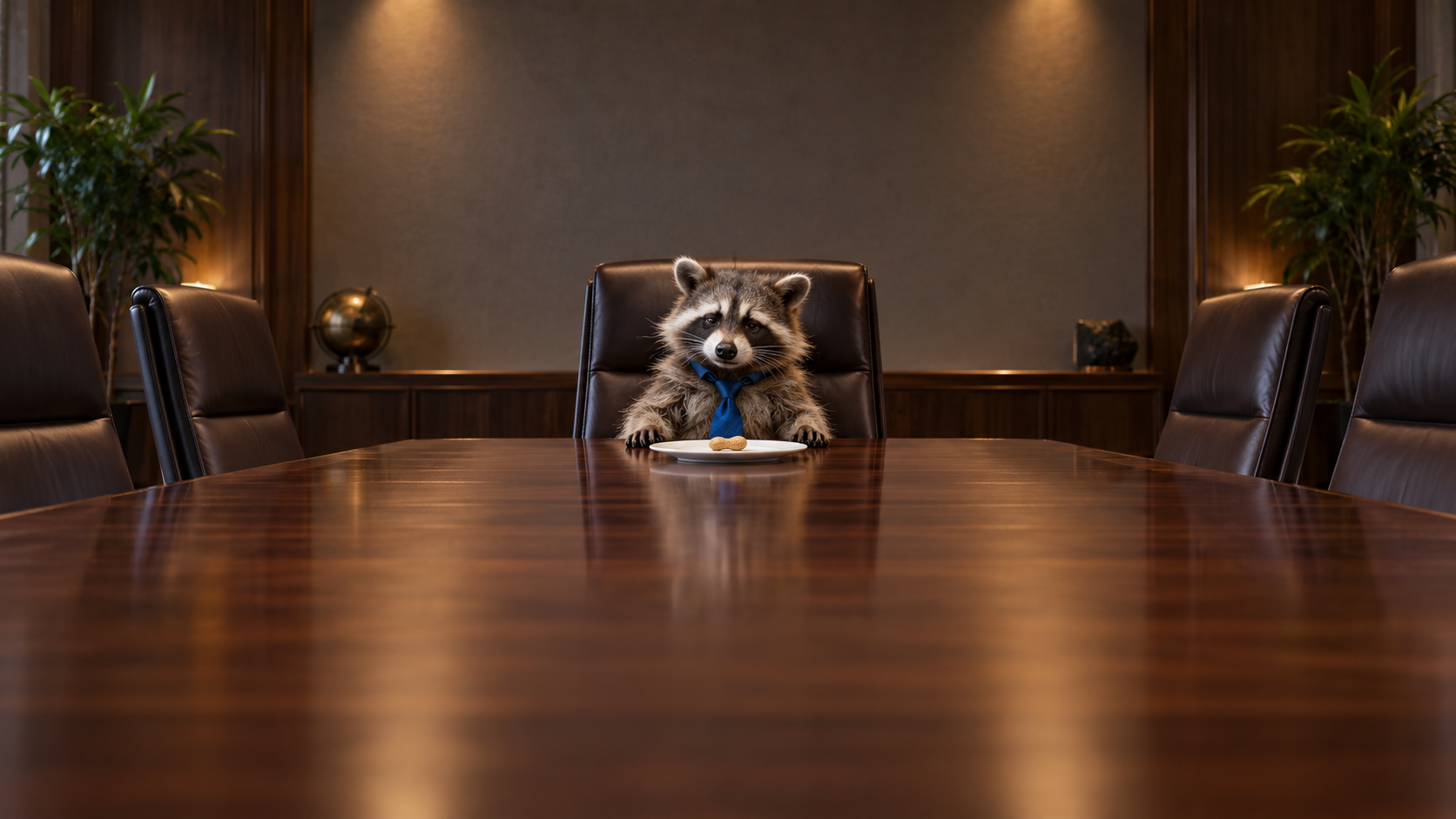
Caption idea: When the meeting budget is one peanut
Download original image (1672 × 941)A tiny tired raccoon wearing a loose cobalt office tie sits at an enormous wooden boardroom table with one small peanut on a white plate. Serious boardroom lighting, deadpan expression, realistic fur and a simple uncluttered composition. No text or logos.
The contrast is scale: an enormous formal meeting and an absurdly small reward. Keep the peanut visible in the final crop. A caption about office life reinforces what is already in the picture; a long explanation about the raccoon's backstory weakens it.

Caption idea: I was gone for one day
Download original image (1672 × 941)A small orange cat wearing reading glasses sits at a cream office desk beside an impossibly tall mountain of blank envelopes. One paw rests on a tiny computer mouse. Calmly overwhelmed expression, soft daylight, realistic fur, simple background, no writing or logos.
This image works as a reaction to a familiar moment. Change the caption for your audience: returning from vacation, checking a group chat or opening customer support. Keep the same visual premise and test which situation readers recognize.
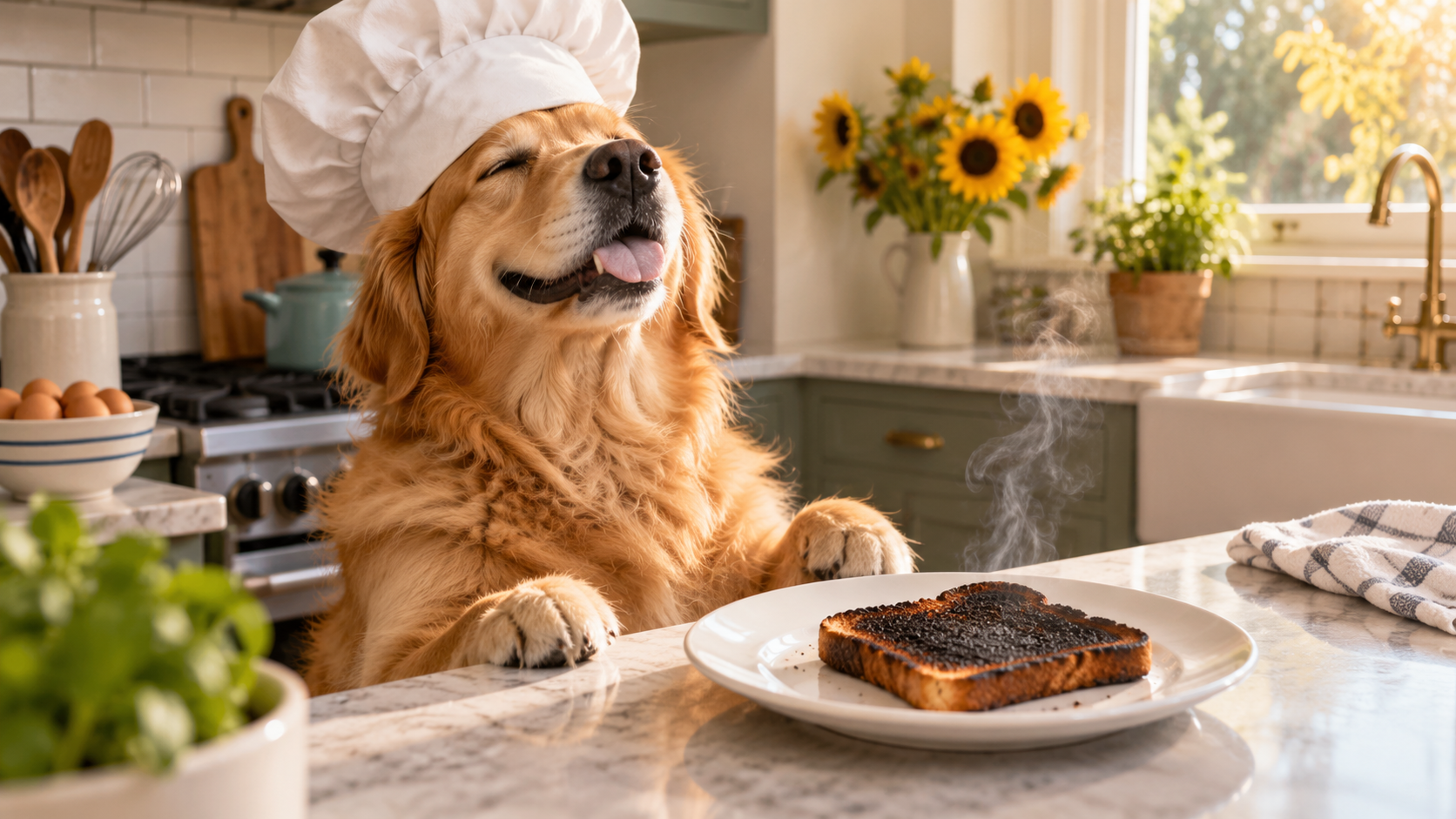
Caption idea: Followed the recipe emotionally
Download original image (1672 × 941)A golden dog in an oversized white chef hat looks extremely proud beside a pristine plate holding one burnt slice of toast. A faint wisp of smoke rises from the toast. Warm kitchen daylight, realistic textures, one clear visual joke, no lettering or brands.
The expression and the failed result should tell opposite stories. If the toast looks delicious or the dog looks ashamed, the contradiction disappears. Review the prop as carefully as the character.
Build a premise before generating
| Recognizable situation | Visual contradiction | Short caption direction |
|---|---|---|
| First day at the gym | Tiny animal faces an enormous dumbbell | Confidence arrived before strength |
| Trying to save money | Character guards one coin like treasure | My emergency fund |
| Group project | One exhausted character carries an enormous blank chart | We all contributed |
| Cooking without measuring | Proud chef presents one burnt item | Creative interpretation |
Choose one row and describe the physical scene. A caption should connect it to a real feeling, not compensate for a confusing image. Prefer a concrete prop, a clear expression and a simple background over a list of surreal accessories.
Choose a generator by the revision you need
An image tool that supports both generation and editing can help you preserve a useful scene while changing one prop or expression. OpenAI's image-generation documentation describes generation and edit workflows. Compare the controls in the interface you actually use.
For one standalone joke, a new generation may be enough. For a recurring character, keep an approved identity reference and a consistent style brief. Save the funny accepted image before asking for changes; a later variation can improve the prop while losing the expression that made the joke work.
Add captions that stay readable
Write three alternatives of roughly one short sentence, then choose the one that adds the most with the fewest words. Place the caption near the center of a vertical social frame when that leaves the face and key prop unobstructed. Use a bold font with a dark outline or a solid backing where contrast requires it.
Check the actual phone preview. A caption can fit the editor canvas and still be obscured by app controls or a feed crop. Keep meaningful text away from the top and bottom edges, avoid tiny type and do not split a short phrase into six lines. Platform previews are more useful than treating one safe-area measurement as universal.
For TikTok meme images, decide whether the post is a single image, a photo sequence or a video made from the scene. Each needs its own crop and timing. Adding slow motion to a still does not automatically make the joke stronger; let the viewer see the contradiction.
Review the joke and the file separately
Inspect hands, paws, contact with furniture and important props. Then ask whether the joke is understandable without your explanation. Remove distracting details rather than adding another caption to explain them. Download the original instead of enlarging a thumbnail.
Track meaningful audience responses when you publish: people repeating the joke, sharing it or connecting it to their own experience. A list of funny AI image prompts is a starting point, not evidence that a particular post will go viral.
Create a recurring comedy character
Use Clout to create an original AI character and generate a series of photos and videos around recognizable situations. Keep the identity stable while changing the joke, setting and prop. A small repeatable series is easier to build on than unrelated images with no shared character.