

The same-character problem becomes visible when you change the camera angle, light or scene. Use the reference and contact sheet below to practice reviewing those changes before producing a larger creator series.
The reference and six-view result

Identity reference made with the built-in image tool; this is an original fictional person.
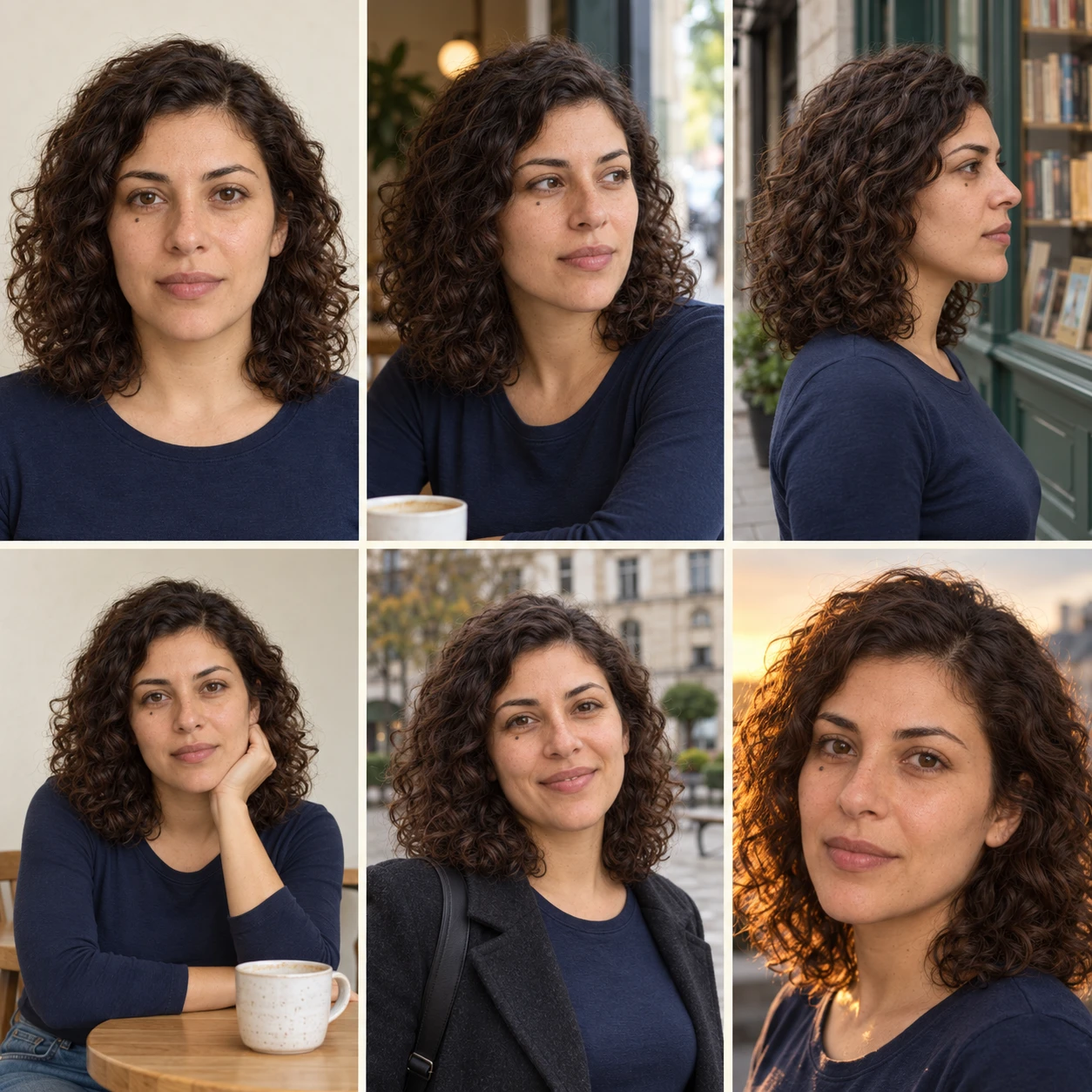
One composite render: front, three-quarter, profile, seated, courtyard and sunset views. It illustrates review criteria rather than persistence across six separate requests.
Download the identity reference, the six-view result and the exact submitted prompts. Keep the original reference separate from accepted outputs so an accidental wardrobe change does not become the next baseline.
What passed and what needs another attempt
The face, dark curls and navy top remain recognizable through the front, profile and warm-light views. The courtyard panel adds a dark jacket that the brief did not request. The distinguishing facial mark also needs closer positional review as the head turns. Those are observed limitations, not a success score.
A six-panel composite shares context within one generation. To evaluate your chosen tool across requests, generate the same six briefs independently using the same uploaded identity, and save every attempt. Do not count one composite as six separate continuity tests.
| Check | What to do with this result |
|---|---|
| Face and hair | Compare jaw, nose, brows and curly hairline against the original |
| Wardrobe | Reject the extra jacket if the navy-only brief is mandatory |
| Distinguishing mark | Inspect location at each head angle; do not rely on one frontal likeness |
| Scene diversity | Separate a new background from evidence of stable identity across requests |
A complete prompt for the next frame
Use the supplied fictional adult identity reference. Preserve face proportions, curly hairline, brown eyes, age and navy crew-neck top. One person, three-quarter portrait seated beside a cafe window, neutral expression, soft overcast light. Change the location and framing only. No added outerwear, accessories, text or logos.
Upload the original portrait through the model’s identity/reference control where one exists. A seed, style reference and identity reference serve different purposes; use the controls documented for the exact model you selected. Plain text describing the same hairstyle is a weaker constraint than an accepted visual reference.
Revise the smallest failed constraint
If wardrobe drifts, retain the identity and scene while explicitly forbidding outerwear. If the face drifts at profile, simplify the scene and compare a three-quarter view before a full side view. If lighting hides the distinguishing mark, request even light before changing the face description.
For each attempt, record reference filename, model, settings, prompt, failure and acceptance decision. Then compute your own accepted-to-attempted ratio. This example has one portrait generation and one composite edit; it supplies no cross-vendor acceptance rate.
Carry the approved identity into production
Use accepted photos as reviewed inputs for a video scene, then inspect identity during movement. The reference-to-video example keeps creator and prop roles separate. For clothing-led production, use the nine-frame lookbook exercise to review garments independently from the face.
Create your AI influencer in Clout and turn one persona into a repeatable content system.


