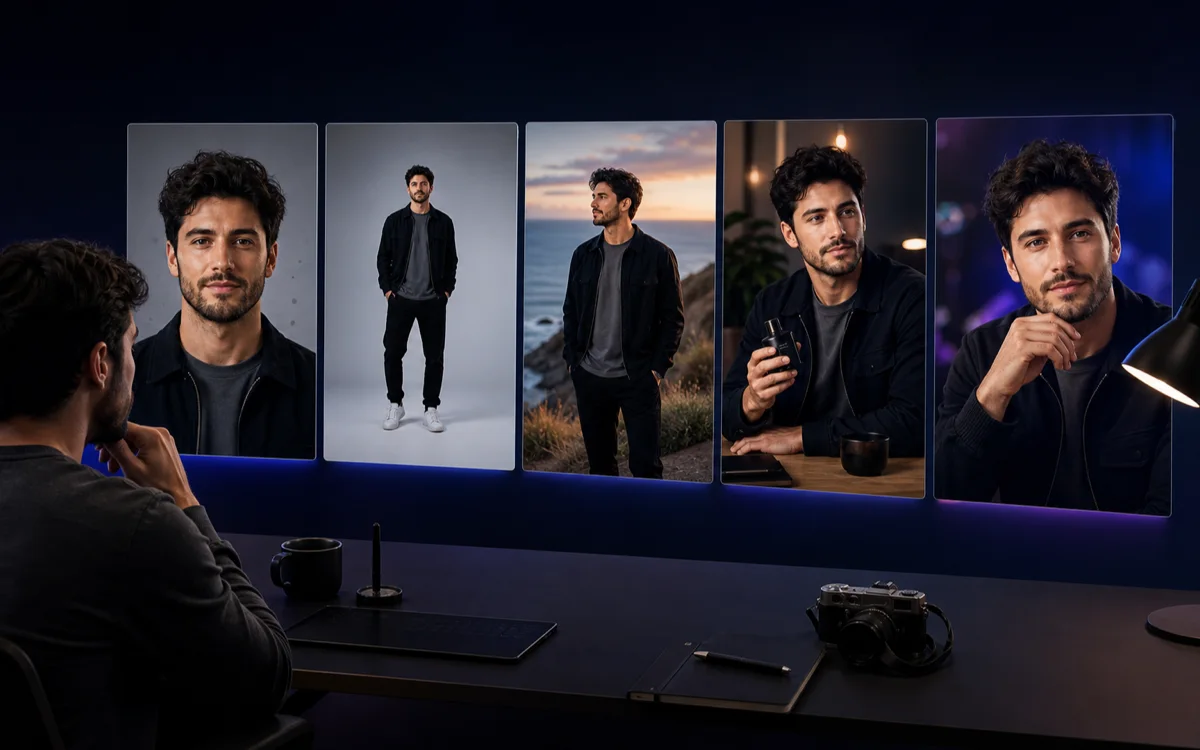
The ZenCreator AI image editor is for changing an existing visual or working from references. This guide focuses on non-explicit creator and product imagery. For platform features and the package table, read the ZenCreator review and pricing guide.
The hardest part of an AI edit is often preserving the details you did not ask to change. A new background is little use if the face shifts, a product label becomes unreadable or the lighting stops matching. Plan the edit around those acceptance criteria before spending credits.
What the editor documentation says
ZenCreator’s official Image Editor help article describes required reference uploads, model selection, an optional prompt, aspect ratio and output count. Batch mode processes each uploaded image separately; combined editing uses inputs together. Available reference counts and resolution settings depend on the selected model. The generation button displays per-image and total credit costs.
The model menu changes over time. Use the current help article and in-app controls to check the options actually available to your account. This guide does not assume every setting works identically across models, and it does not claim that a particular model will always preserve identity.
Put the guide to work
Build your AI creator in Clout
Create a reusable persona, generate social-ready photos and videos, and turn one character into a repeatable content system
Batch editing or combined editing?
| Your task | Workflow to evaluate | Acceptance check |
|---|---|---|
| Apply one background direction to several portraits | Separate edits for each input | Every source remains a distinct, recognizable portrait. |
| Compose a creator and a product into one scene | References used together | Both the character and product survive the composition. |
| Explore three treatments of one photograph | Variations from one reference | The source identity remains stable across alternatives. |
Do not assume uploading several photos automatically means a batch. Decide whether you want several independent outputs or one composition built from several inputs. Mixing those intentions makes it harder to diagnose a disappointing result.
A prompt structure for controlled edits
Write four things: the requested change, the subject to preserve, the composition and the finish. The examples below are original illustrative briefs, not tested output guarantees. Use your own assets or material you have permission to edit.
Background-only portrait edit
Replace the studio background with a softly lit café interior. Preserve the adult character’s face, hairstyle, expression, jacket and pose. Keep the same waist-up crop. Match the background perspective and use natural window light.
Product scene composition
Create a tabletop product scene using the supplied bottle as the product reference. Preserve the bottle shape, cap color and label layout. Place it on a pale stone surface beside a folded linen cloth. Use soft daylight and a clean commercial-photography finish.
Wardrobe revision
Change the adult character’s blue jacket to a plain charcoal blazer. Keep the face, hair, hands, pose and location unchanged. Preserve the original camera angle and realistic fabric texture.
If the task has several major changes, split it into stages and approve each stage before continuing. Otherwise, you cannot easily tell whether the problem came from a reference conflict, an ambitious composition or one unclear instruction. Save the last acceptable result so a later edit does not force you to restart.
Review results before making a larger batch
- Inspect the face: compare shape, hairline, expression and distinctive features with the source.
- Inspect the requested change: confirm the edit actually happened and did not spill into unrelated details.
- Inspect products and text: check packaging, logos and labels at full resolution.
- Inspect composition: look for inconsistent shadows, scale, reflections and perspective.
- Inspect the intended crop: make sure essential details survive the final social or storefront format.
Test one result before ordering many variations. More outputs from an ambiguous prompt can simply create more work to reject. When the baseline succeeds, expand gradually and record which changes improve the usable-output rate.
How to judge the real editing cost
Record the displayed quote, how many results you request and how many you approve. In a hypothetical batch costing $4, two approved assets cost $2 each even if ten files were returned. Keep manual cleanup time alongside that number: it affects whether the editor saves you time overall.
For the current package comparison, use our ZenCreator pricing section. Avoid translating credits into image counts without checking the actual operation and settings.
When a persona workflow is the better starting point
An editor is useful when you already have a strong source image. If you are still defining who the creator is, first establish a stable identity, reference set and visual direction. Our same-character workflow guide explains how to structure that process.
Clout is an option for building the reusable persona and producing a series around it. You can evaluate it alongside editors using the same portrait and scene brief. For a wider shortlist, see our AI photo editor comparison. For the meaning of “no restrictions” claims, see the separate unrestricted AI guide.
Build an original AI creator in Clout and evaluate one persona across a complete content series.