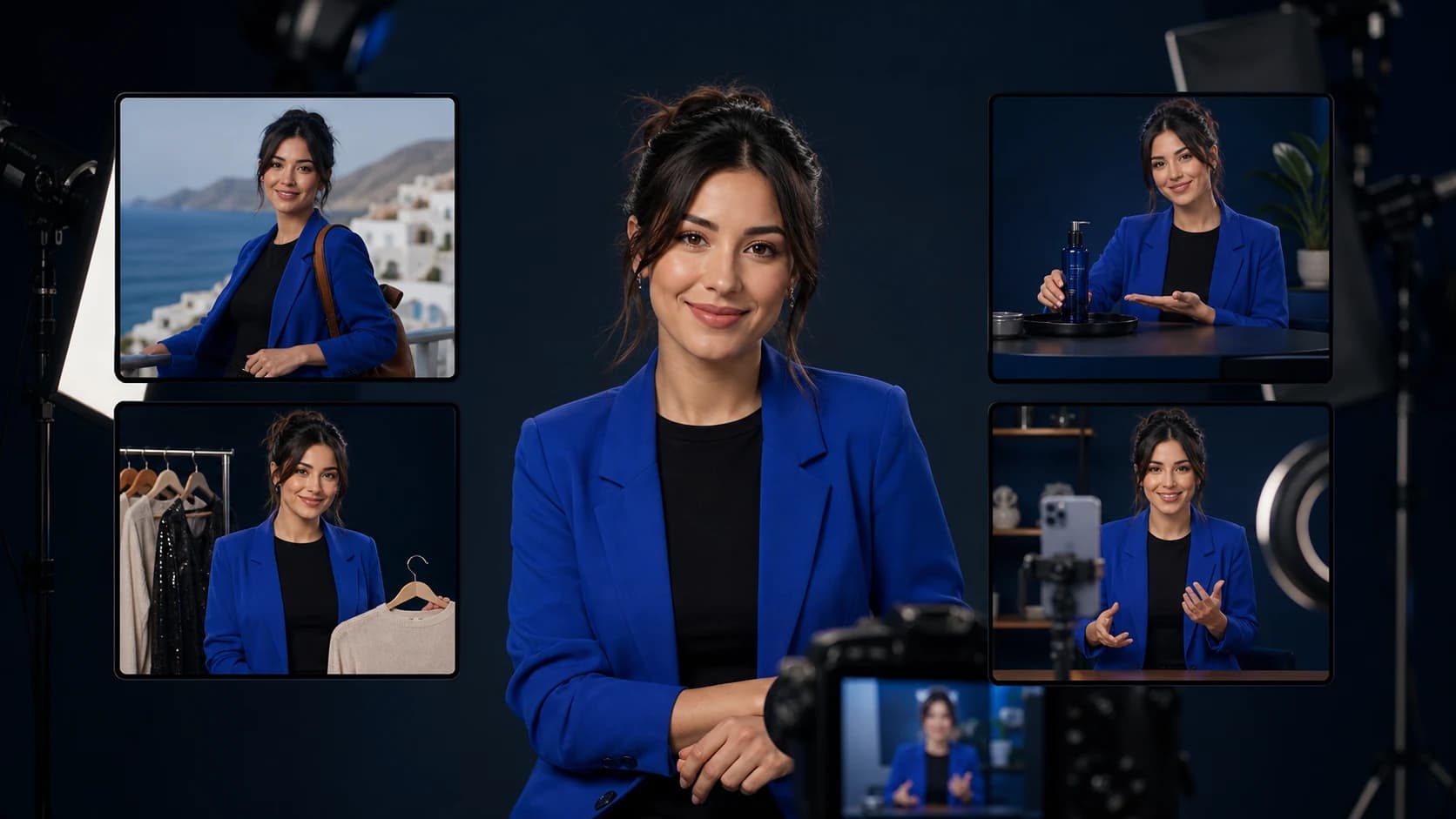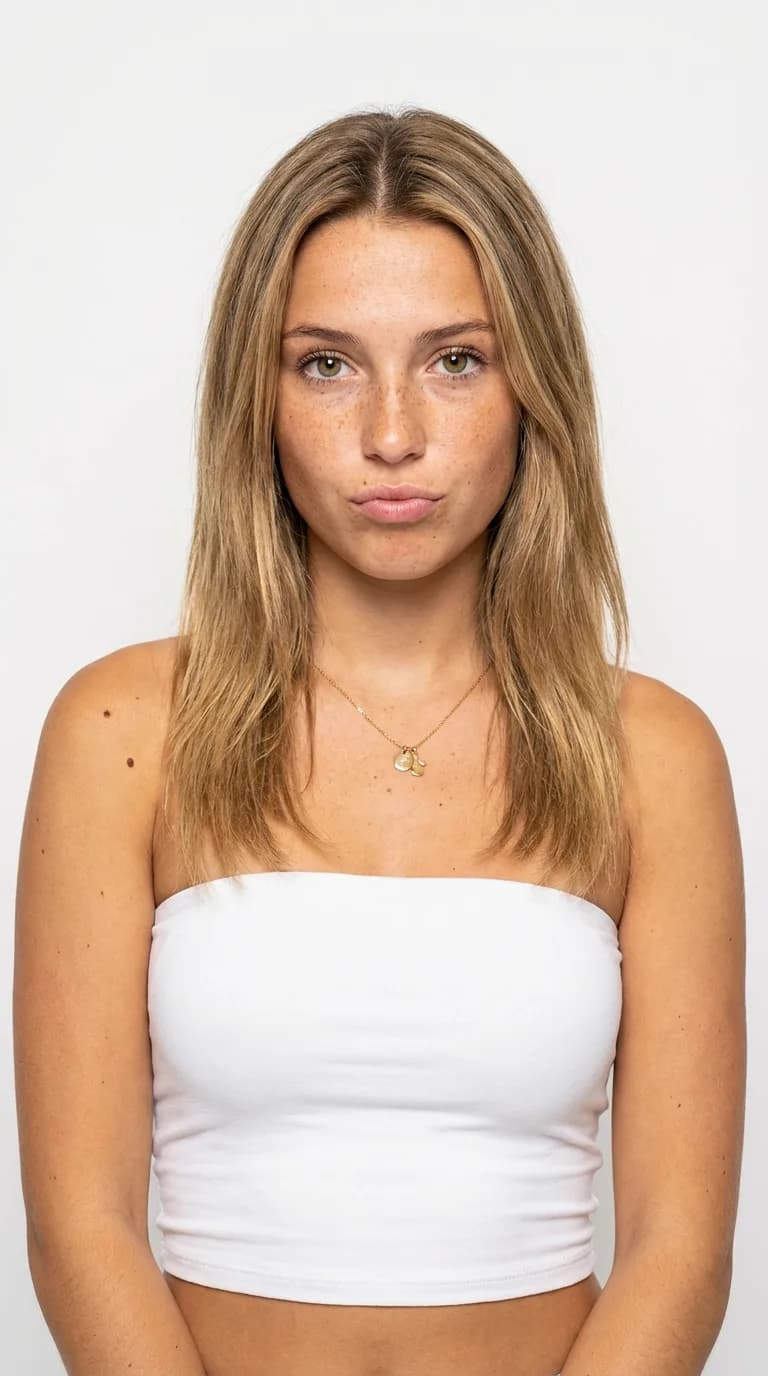
An AI influencer generator should do more than create a single attractive image. The useful version helps you build a virtual creator that can show up again and again with a consistent face, style, voice, and content direction.
If your persona changes every time you generate, you do not have an influencer. You have disconnected images. This guide explains how to think about AI influencer creation in a way that works for real social publishing.
What is an AI influencer generator?
An AI influencer generator is a tool for creating a digital creator persona and producing media around that persona. The best tools help with both identity and output: the creator's look, traits, visual style, photos, videos, and campaign variations.
The job is not just image generation. The job is repeatable creator production.
How does an AI influencer generator work?
Most workflows combine a character definition, one or more approved references, image generation, and video generation. You first describe or build an original persona. The generator then uses the saved identity as an anchor while you change the scene, outfit, pose, product, camera direction, or content hook.
- Define the identity. Choose stable features such as the face, hair, apparent adult age, proportions, niche, and signature style.
- Approve references. Select a small set of images that clearly show the same character from useful angles.
- Generate a content batch. Keep the identity fixed while changing one creative variable at a time.
- Turn stills into video. Animate strong first frames with controlled movement and camera direction.
- Publish and learn. Track which hooks, formats, and topics earn attention, then create the next batch from those signals.
This persona-first system is different from repeatedly entering a text prompt into a generic image tool. For the complete build process, follow the step-by-step AI influencer guide.
Start with the persona, not the post
Most failed AI influencer experiments start with a prompt like "make a viral influencer photo." That might create an interesting asset, but it rarely creates a durable creator.
A better starting point defines:
- Visual identity: face, hair, style, proportions, and recognizable details
- Creator lane: fashion, fitness, beauty, lifestyle, gaming, music, travel, or product demos
- Content format: selfies, product shots, first frames, talking-head concepts, or short-form scenes
- Brand rules: what the persona can promote, how it should appear, and what should be avoided
Build a reusable asset system
Consistency improves when you treat the persona like a production asset. Save the strongest reference images, reuse prompt language that works, and keep a simple style guide for the creator.
In Clout AI, that means using the persona as the center of the workflow instead of starting from a blank prompt for every image or video.
Create content variations without changing the person
The point of an AI influencer generator is to change the creative variable while keeping the creator stable. For example, you can test:
- Different hooks for the same product
- Different locations for the same persona
- Different outfits while keeping the same face
- Different first frames for the same video idea
- Different ad angles for TikTok, Reels, and Shorts
This is where AI creators become useful for marketing. You get more creative surface area without needing a new shoot every time.
What can you create with an AI influencer generator?
A complete generator should support the formats required to run a creator account, not only profile pictures. The exact outputs vary by platform, but a practical workflow can include:
- Profile portraits and consistent lifestyle photos
- Instagram carousel images and story concepts
- TikTok, Reels, and YouTube Shorts first frames
- Short AI influencer videos with directed movement
- Product placements and UGC-style campaign assets
- Multiple hooks, scenes, and offers for creative testing
Still images are usually the identity test. Video is the production test because motion can introduce facial drift, unnatural movement, or scene changes. See the AI influencer video generator guide for a video-specific workflow.
What to look for in an AI influencer tool
When comparing tools, look for workflow depth instead of only image quality. A strong generator should support persona reuse, image creation, video creation, prompt iteration, and easy movement from concept to post-ready asset.
| Feature | Why it matters |
|---|---|
| Persona consistency | Keeps the creator recognizable across posts |
| Photo and video workflow | Lets you move from still assets into short-form production |
| Variation generation | Supports creative testing without restarting the persona |
| Reusable references | Improves control over face, style, and direction |
Run a five-output consistency test before you commit to a tool: one clean portrait, one full-body image, one new outfit, one product scene, and one vertical video. Compare the face, age, body proportions, hands, product details, and overall style across the complete set. A platform that makes one excellent portrait but loses the identity on output five is not yet solving the influencer workflow.
Free versus paid AI influencer generators
A free plan is useful for testing interface quality and the first character concept. It may be enough if you only need a few drafts. Regular publishing usually requires more generations, reusable references, stronger output resolution, video access, or clearer commercial-use terms.
Do not compare plans only by the headline credit count. Check what one usable image or video actually costs, whether failed generations consume credits, whether credits expire, which models are included, and whether downloads are watermarked. The free versus paid AI influencer generator guide provides a fuller checklist.
AI influencer generator use cases
Different goals require different production systems. A fictional fashion creator needs outfit and location consistency. A brand mascot needs reliable product detail and approved brand rules. A UGC-style creator needs believable first frames, hooks, and multiple ad angles. A story-driven virtual personality needs a character bible, recurring formats, and a recognizable voice.
Choose one audience problem before choosing an aesthetic. A useful niche such as affordable streetwear, beginner fitness, apartment cooking, or travel planning creates a reason to follow. A generic attractive persona gives you images but not a durable content strategy.
Compare AI influencer generators by workflow
Different tools lead with different jobs. Eromify, Celebify AI, and APOB AI emphasize broad production access. MakeInfluencer.AI combines character creation with a deeper production stack. Glambase can refer to either influencer creation or downstream creator operations, depending on the domain.
Compare every option with the same brief: one persona, several scenes, a product integration, vertical first frames, and a short motion concept. The best tool is the one that produces a coherent creator account with the least identity drift and workflow friction.
If you are making a shortlist, use the AI influencer generator comparison to evaluate complete workflows rather than isolated demo images.
Common mistakes
The most common mistake is optimizing for a single impressive image instead of a repeatable identity. Other mistakes include copying real people's likenesses without rights, ignoring platform disclosure rules, and changing too many variables at once when testing content.
How to publish an AI influencer responsibly
Create an original adult character and use only source material you own or have permission to use. Do not imitate a real person or imply an endorsement that does not exist. Review the current synthetic-media, advertising, and disclosure rules for every platform and country where you publish.
Keep records for licensed inputs, sponsored campaigns, claims, and approvals. Clear disclosure protects the audience and makes the creator easier for brands and partners to evaluate. Generated media does not remove the publisher's responsibility for likeness rights, product claims, or audience safety.
Build the creator, then improve the system
The first objective is not virality. It is proving that you can produce ten recognizable, useful posts around one character. Track retention, saves, shares, profile visits, and comments by format. Use those signals to improve the hook or topic while keeping the identity stable.
Clout's AI influencer generator is designed around that loop: shape an original persona, produce consistent images and videos, launch on social platforms, and build monetization paths around the audience.
A practical first-week workflow
On day one, write the character brief and approve a clean reference portrait. On day two, test the same identity in several angles, outfits, and lighting conditions. Reject the character if those basic variations already cause obvious drift. Fixing the foundation is faster than repairing every future post.
Use days three and four to make a small content batch around three repeatable topics. Create a still image and a vertical first frame for each topic, then animate only the strongest concepts. On day five, review the entire grid together. The creator should look like one person and the posts should give the intended audience a clear reason to follow.
Publish gradually instead of dumping every asset at once. Early comments, saves, watch time, and profile visits reveal which ideas deserve another variation. Keep a simple production log with the reference used, the prompt or controls, the output format, and the result. That record turns isolated generations into a repeatable content system.
Bottom line
A good AI influencer generator helps you create a consistent virtual creator, not just a random image. Define the persona first, build reusable references, then generate controlled content variations around that identity.
Create your AI influencer with Clout if you want a studio focused on reusable AI influencer production.