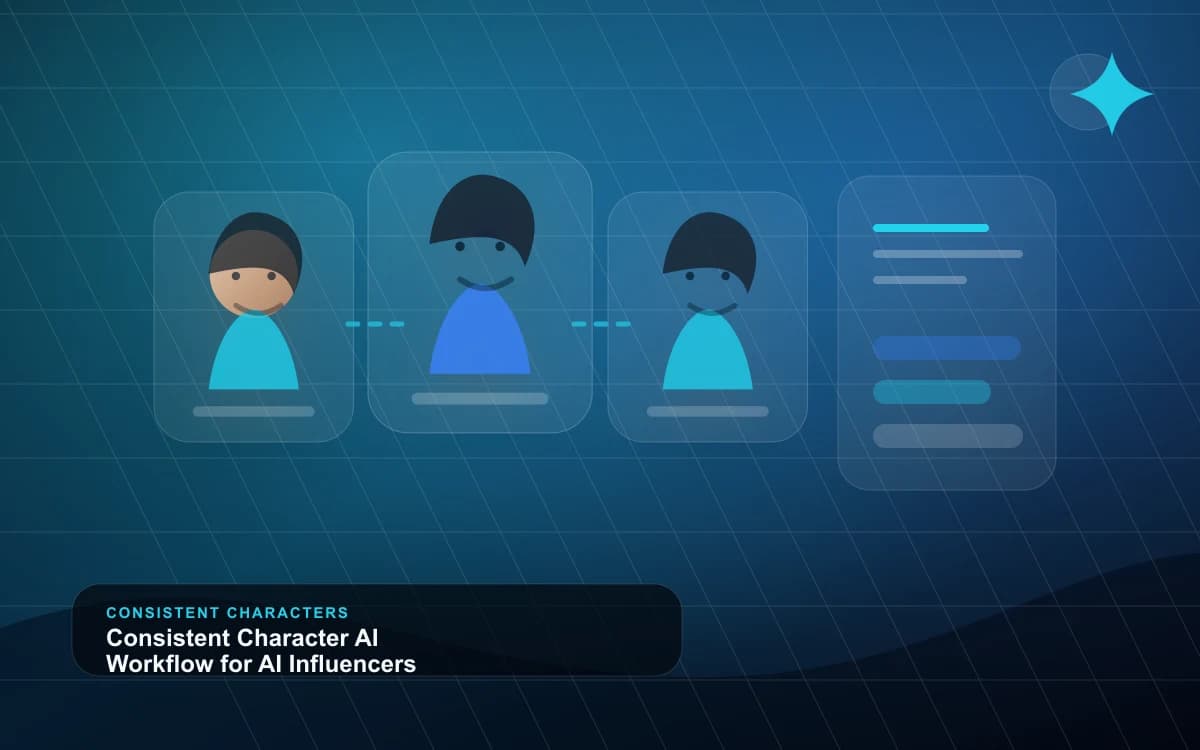
Consistent character AI searches usually come from creators who are tired of rebuilding a persona from scratch. The goal is simple: one virtual creator should look like the same person across many posts.
For an AI influencer, the workflow matters more than the model name. You need a persona brief, references, variation rules, review criteria, and a path from still images into video.
Put the guide to work
Build your AI creator in Clout
Create a reusable persona, generate social-ready photos and videos, and turn one character into a repeatable content system
Write a persona brief first
A persona brief is a small style guide for the creator. It defines what should stay recognizable even when the scene changes.
Keep the brief practical. A useful brief is short enough to reuse inside prompts and specific enough to catch mistakes during review.
- Face and hair details
- Creator niche and audience
- Wardrobe range and color palette
- Camera style and lighting
- Platform and monetization goals
Build reference sets by use case
A profile portrait, a product demo, a lifestyle post, and a first frame all need different framing. Do not judge consistency from one image style only.
Create small reference sets for each format. Then use those sets to guide future batches.
Separate identity prompts from campaign prompts
The identity prompt should stay stable. The campaign prompt can change. This separation keeps the character consistent while still letting you test products, hooks, locations, and scenes.
| Prompt layer | What it controls |
|---|---|
| Identity | Face, hair, age range, style, creator niche |
| Campaign | Offer, product, hook, location, channel |
| Format | Selfie, product shot, first frame, carousel, ad |
| Safety | Disclosure, rights, adult boundaries, brand rules |
Use review rules before publishing
Review each generated batch for realism, identity match, platform fit, and rights risk. If a post looks like a different person, do not publish it just because it is visually strong.
A smaller batch of consistent assets is more valuable than a large folder of disconnected images. Continue with the brand-ready adult AI model workflow when you are ready to turn the reference set into a launch plan.
Create your AI influencer in Clout and turn one persona into a repeatable content system.