

For actor marks and a motivating movement cue, use the camera blocking guide and free scene planner.
Shot composition is how you arrange the visible elements inside a frame so the viewer can read the scene. It includes where the subject sits, how much of the environment appears, which objects compete for attention and what the frame leaves out. A beautiful background is useful only when the important action still reads.
This guide uses an original fictional scene called The Empty Seat: a traveller in a mustard coat waits beside an empty stretch of bench. We generated a wide still, then made two independent reference-based edits. Comparing the returned images makes composition decisions concrete for photography, AI cinema and short-drama planning.
What is composition in film
Composition in film concerns the visual arrangement of each shot and how that arrangement works within a sequence. Placement, scale, depth, light and empty space help establish which information matters. The frame may direct attention toward a face, a product, an approaching person or a deliberately unoccupied area.
Nikon’s video composition guide connects framing with wide, medium and close views. Its thirds grid is a useful starting exercise, with room to try other placements. Sony Cine’s composition discussion considers choices such as asymmetry and framing through a doorway during scene planning. Choose an arrangement for the information it carries rather than treating a grid as a compulsory formula.
A shot type names a view, such as a close-up. Composition determines what you do inside that view. Two medium shots can communicate different priorities if one includes an empty chair and the other excludes it. Blocking concerns the placement and movement of performers; composition is the resulting frame as seen from the selected viewpoint.
Build a composition around one readable story beat
- Name the beat — write the information the shot must reveal in one sentence.
- Choose the essential elements — identify the person, action and object that must remain visible.
- Set the frame shape and shot size — decide how much context the audience needs.
- Place the subject and space — inspect looking room, headroom and the relation between important elements.
- Check depth and distractions — use foreground and background deliberately.
- Review the actual result — test the intended crop and sequence before accepting it.
Our beat is “a traveller waits beside a seat that remains empty.” That brief gives the empty area a job. A tight face-only view could show her expression, but it would omit the relationship that defines this particular beat. Before generating or shooting anything, decide which version of the information the audience needs now.
Inspect the original shot composition examples
All three study frames below are actual built-in image_gen outputs. The medium and doorway versions each used the same original wide PNG independently. They were not created by cropping the original or by moving a camera in a shared 3D scene. The downloadable record includes the exact prompts and our observations.
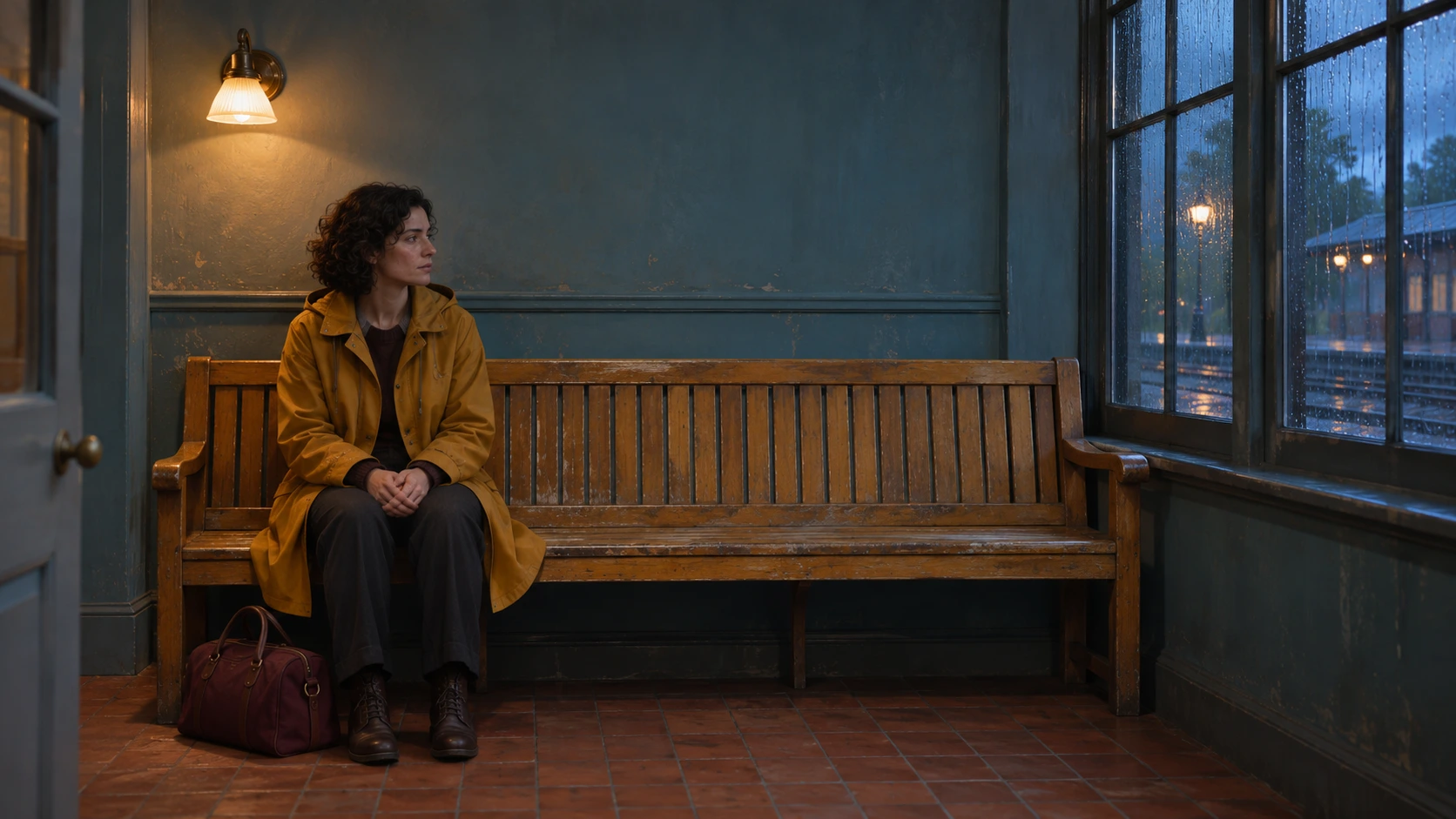
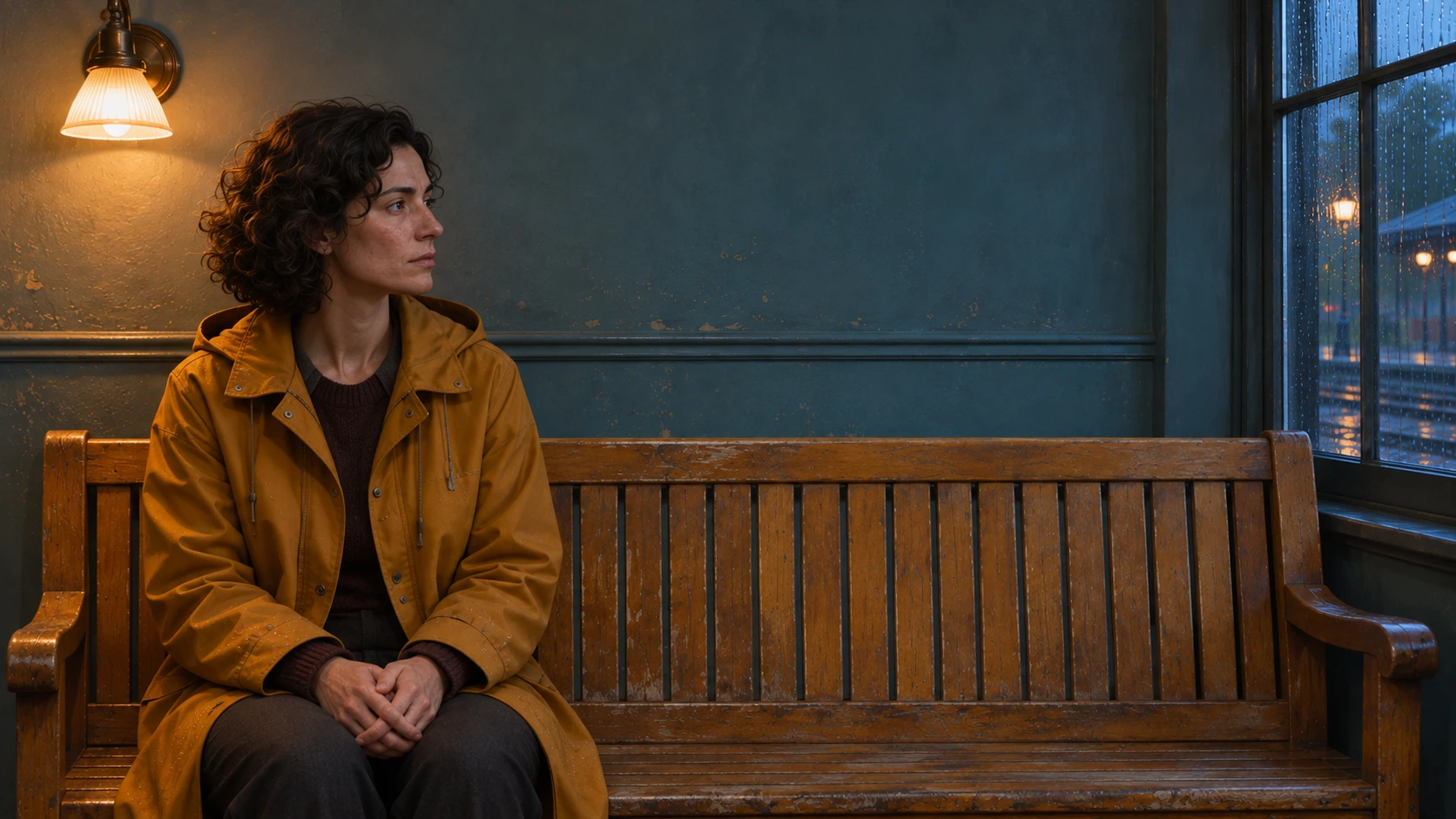
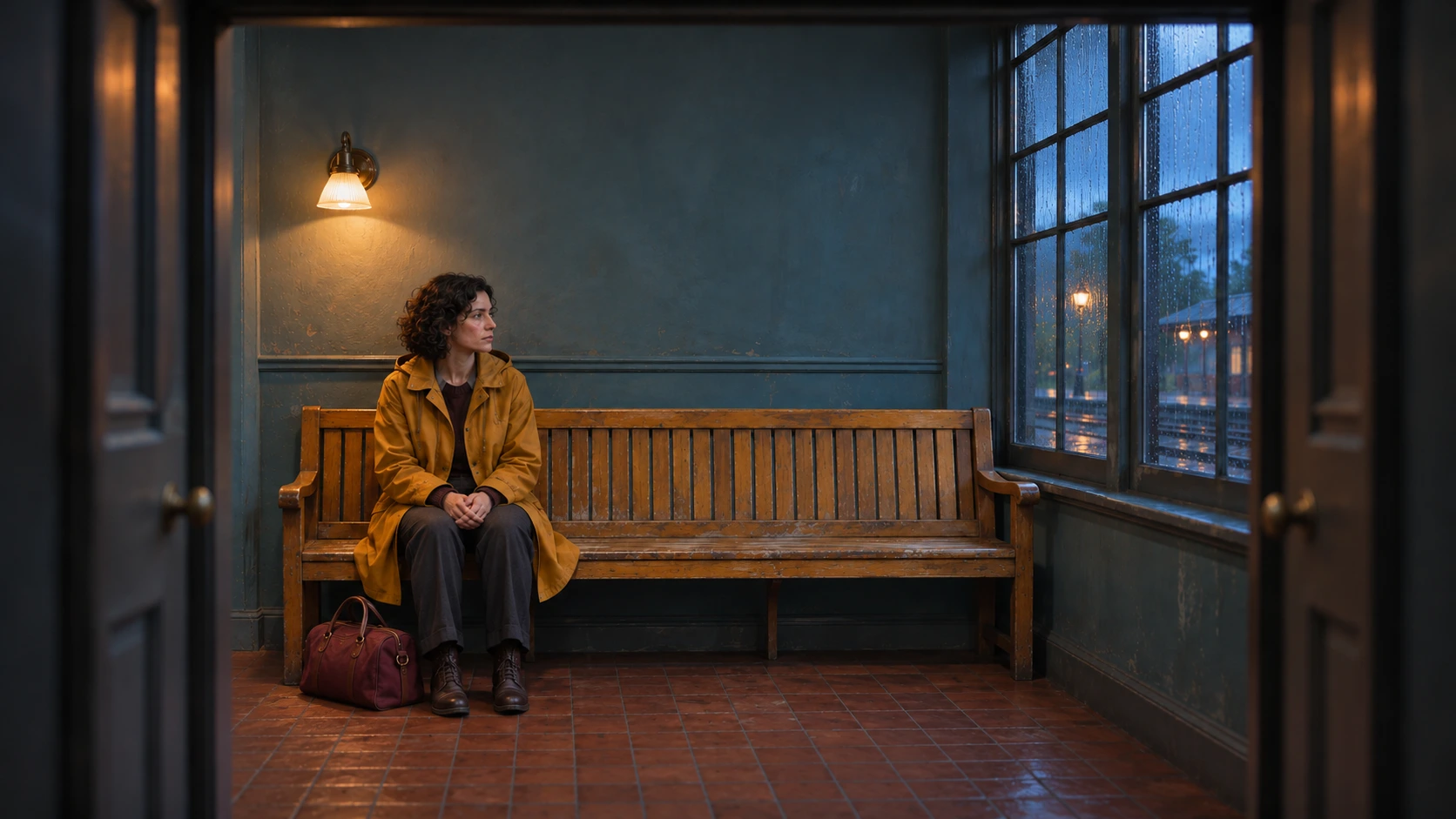
| Frame | Visible difference | Decision it supports |
|---|---|---|
| Wide context | Full seated figure, travel bag, floor and long empty bench remain visible | Introduce the waiting-room situation and the travel prop |
| Medium relationship | The face is larger; feet and bag are outside the frame while empty bench remains | Prioritize the traveller while retaining the vacant-seat relationship |
| Doorway foreground | Dark doorway edges surround the room and the traveller appears smaller within it | Try a more distant observational viewpoint with foreground depth |
These interpretations are choices for this scene. We did not measure whether an audience feels suspense, loneliness or any other emotion. The useful visible evidence is what each returned frame includes, excludes and emphasizes.
Recognizable clothing, right-facing gaze and the broad room arrangement carry across the edits. Face detail, hair, bench proportions, bag placement, lamp position and window geometry also shift. Those differences matter if you intend to cut between the images. The study demonstrates a framing comparison; it does not establish production-ready continuity.
Use thirds and negative space with a purpose
Divide the frame into three equal horizontal and vertical bands as a planning aid. Try placing the main subject near a vertical division, then compare that arrangement with a centered view. Ask which version makes the relationship easiest to understand. A centered product, a symmetrical corridor or a direct address can be a deliberate choice.
Negative space is the less occupied area around the subject. In our wide frame, the unoccupied bench gives the traveller somewhere to look and lets the absence remain visible. Filling that area with another person would change the beat. Cropping it away would remove the comparison between occupied and vacant space.
Looking room is the space available in the direction a subject faces or looks. Headroom is the space above the head. Review both at the final crop. An accidental lamp edge touching the head, an unclear hand position or a bright window competing with the face can weaken a frame even when the subject follows a thirds grid.
To compare which depth planes stay readable, use the deep focus cinematography guide and original Blender study.
Add depth without hiding the action
Foreground, middle distance and background can separate visual layers. A doorway may anchor the camera’s position, while a bench and window explain the room behind the subject. Keep those layers readable rather than adding objects simply to make the image feel cinematic.
In the doorway edit, the dark vertical jambs visibly enclose the brighter interior. They occupy frame area, so the woman becomes smaller and her face is harder to read at thumbnail size. That is a tradeoff to review. If the purpose were a subtle reaction, the medium version would offer more facial detail.
Light and color also influence visual emphasis. The mustard coat separates from the blue wall in this study, while the warm practical lamp and bright window can compete for attention. Compare the frame at the size viewers will actually see; a pleasing full-resolution image may become an unclear mobile thumbnail.
Write AI composition prompts as visible relationships
Begin with the scene, then specify the important arrangement. “Cinematic masterpiece” leaves the model to invent the framing. A more useful brief states subject position, gaze direction, shot size and which relationship must survive.
Original fictional traveller in a mustard raincoat, seated near the left third of a railway waiting-room bench, looking camera-right toward its empty right half. Wide eye-level composition with full seated figure, travel bag and feet visible. Warm wall light, cool rainy window ambience, no other people or signage.
For an edit, name the reference and the details to preserve before requesting one framing change. Our medium request kept the right-facing gaze and vacant bench while allowing the feet and bag to leave the frame. The doorway request preserved the seated situation while adding visible foreground jambs.
Download the exact original and edit prompts. Prompt wording records an intention; inspect the returned image to establish what actually happened. The tool did not expose a backend model or optical camera controls. A written lens or camera-distance request would therefore remain creative direction, not verified geometry.
Turn an accepted frame into a sequence brief
Use the shot list maker to record each accepted view and the information it carries. Note whether the bag must stay visible, where the traveller looks and which empty area must remain. Keep those decisions with the reference rather than relying on a memorable prompt adjective.
For dialogue, the shot reverse shot study addresses the relationship between opposing viewpoints. A clear individual composition does not automatically make a reverse angle or an eyeline match work. Review adjacent views together before committing to the edit.
When developing a still in Clout Image and Video or planning a sequence in AI Cinema, inspect the supported operation, references and current quote. These study images are not evidence that every model preserves composition equally. A video result needs full playback: watch whether the framing, body position, gaze and important empty area survive over time. No video was generated for this study.
Review composition before accepting the frame
Use the blank composition review CSV to record the intended beat, must-keep elements, subject placement, space, crop, distractions and continuity issues. Outcome fields begin empty so your review reflects your actual result.
- Can you identify the main subject and action without reading the prompt?
- Are the story-critical person, prop and empty area visible?
- Does the face or product remain readable at the delivery size?
- Do frame edges or foreground objects hide important information?
- Does the crop preserve the intended relationship?
- What changed from the reference or neighboring view?
Download the film composition study
The complete shot composition source pack includes the three unmodified study PNGs, WebP copies, exact prompts, a blank review CSV, dated source record and file hashes. The separate cover is editorial artwork and is excluded from the framing comparison.
Open the printable comparison to view all three embedded frames and use your browser’s Print or Save as PDF command. The source and observation record preserves the reference lineage and visible limitations so the examples remain inspectable.


