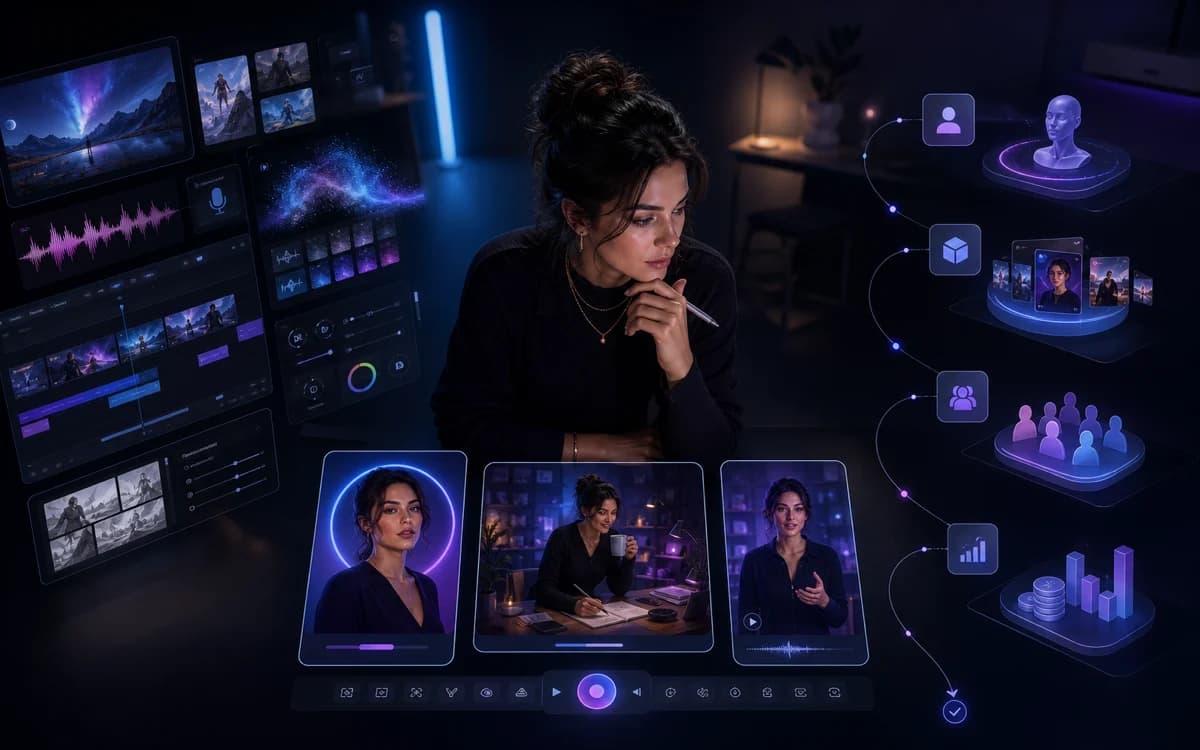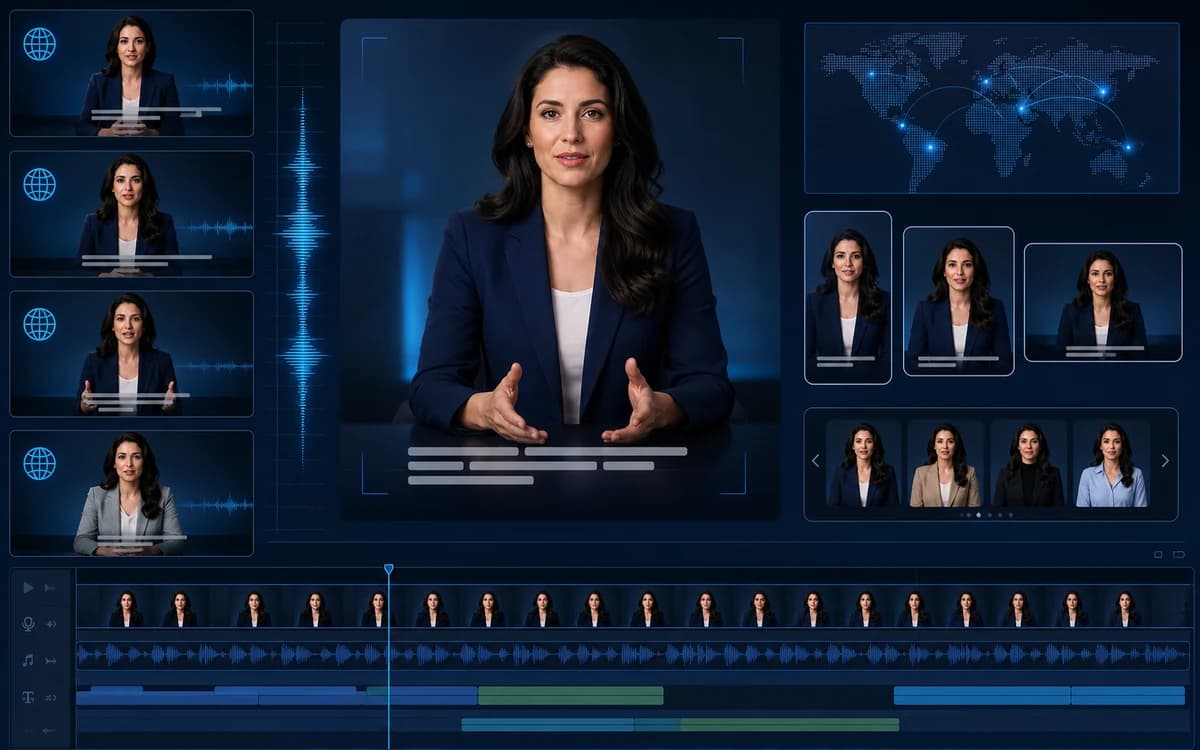
This HeyGen review examines a product that now spans far more than a simple talking avatar. HeyGen offers stock presenters, photo avatars, recorded digital twins, newer expressive avatar engines, translation, dubbing, B-roll, a prompt-led Video Agent, localization, collaboration, and API options.
That breadth makes HeyGen a serious shortlist choice for presenter video, training, product marketing, and localization. It does not make it the automatic choice for an AI influencer account. A recurring social creator needs visual lifestyle content, a niche, content pillars, account voice, distribution, and monetization—not only a person delivering scripts to camera.
What is HeyGen?
HeyGen is an AI video platform built around synthetic and consented digital presenters. Users can select from more than 1,000 stock avatars, turn a photo into an expressive talking avatar, record a digital twin, generate new looks, clone an authorized voice, translate existing video, or assemble scenes through a studio and AI agent.
The platform serves several jobs: marketing videos, UGC-style ads, training, internal communication, sales, localization, personalized outreach, and support. Its avatars speak more than 175 languages and dialects according to the current product page. HeyGen also says stock avatars are built from consented actor and talent data.
HeyGen overlaps with Clout on AI creators but centers a different media format. HeyGen is strongest when a presenter must speak a script repeatedly or in many languages. Clout is built around an original influencer's identity, recurring social photos and motion concepts, content strategy, launch, and monetization. See Clout vs HeyGen for the direct workflow comparison.
Stock avatars, photo avatars, and digital twins
HeyGen offers three important starting paths. Stock avatars minimize setup and suit generic presenter content. Photo avatars turn a single image into a talking video and can support new generated looks. Video avatars or digital twins are created from a recording of an authorized person and aim to reproduce that person's look, delivery, and voice across future scripts.
Avatar IV and Avatar V are the premium expressive engines in the current credit system. HeyGen advertises improved voice sync, expressions, and gestures. The output still requires review: eye line, teeth, lip timing, hands, body movement, lighting, framing, pronunciation, proper nouns, emotion, and the transition between cuts can all determine whether a clip is publishable.
For a fictional social persona rather than a real-person twin, compare the workflow with the consistent-character guide. A talking face can be stable while the larger creator identity remains undefined.
UGC avatars, product marketing, and localization
HeyGen's stock library includes influencer-style and multicultural presenters intended for ads, tutorials, product marketing, and customer communication. This is useful when the buyer needs a spokesperson quickly and does not require a unique creator that no other customer can use. For differentiated brand assets, confirm whether the plan includes a custom avatar and what consent capture is required.
Localization is one of HeyGen's clearest advantages. Video Translation can replace speech and optionally lip sync the translated output. Paid plans also include audio-only dubbing paths. Test the exact language, accent, pronunciation, emotion, pacing, captions, on-screen text, and cultural adaptation; the number of supported languages does not guarantee equal quality in every voice and domain.
Use the best AI UGC generator guide to compare presenter-led output with product-in-hand tools such as MakeUGC and product-URL ad systems such as Creatify. The correct category depends on whether the ad needs a speaker, a believable product interaction, or an end-to-end variation engine.
HeyGen pricing and credits in July 2026
HeyGen introduced a consolidated credit system in 2026. The Free plan currently allows up to three videos per month with limited trials of premium features. Creator costs $29 monthly with 600 credits. Pro starts at $49 monthly with 1,000 credits and scales through larger tiers. Business costs $149 monthly plus $20 per seat and includes 1,500 credits. Annual Creator is advertised at a $24 effective monthly price.
| Plan | Public allowance on July 17, 2026 |
|---|---|
| Free | Up to 3 videos per month and limited premium trials |
| Creator — $29/month | 600 monthly credits |
| Pro — from $49/month | From 1,000 credits; higher paid tiers scale to 100,000 |
| Business — $149/month | 1,500 credits plus $20 per seat |
The official pricing FAQ lists Avatar III at three credits per minute, Avatar IV or V at twenty per minute, full video translation with lip sync at five per minute, and Video Agent at twenty per minute. The newer help center expresses Avatar IV or V as one credit per three seconds, which is the same twenty-credit-per-minute rate. Custom expressive motion can double the cost of the affected scene. Training a photo-based AI model is currently listed at sixty credits.
Monthly credits roll over for one additional month while a subscription remains active. Annual credits can accumulate until annual renewal. Creator and Pro users upgrade to obtain more credits; Business can purchase blocks or enable auto-reload. Verify the estimate shown before generation because engine, motion, resolution, translation mode, and B-roll can change the cost.
Commercial rights and HeyGen's content license
HeyGen's current Terms of Service say that, for Creator, Pro, and Business users, the user owns rights in inputs and outputs and may use outputs commercially. To the extent HeyGen acquires rights in an output, it assigns them to the user. The terms also warn that output may not be unique and that users remain responsible for third-party rights and commercial use.
The other half of the clause is important. Users grant HeyGen a royalty-free, transferable, sublicensable, worldwide, irrevocable license to access, host, store, reproduce, transmit, display, publish, distribute, modify, improve, promote, and use content to develop services and train or improve AI models. The section survives termination.
That broad license may be acceptable for ordinary marketing assets and unsuitable for confidential campaigns, unreleased products, regulated data, or rights-sensitive talent agreements. Business and enterprise buyers should compare any separate data-processing or negotiated terms with the public default before uploading valuable source media.
Consent, disclosure, and prohibited uses
HeyGen requires permission for uploaded people, digital twins, voices, and impersonation. Its terms prohibit sexually explicit, pornographic, deceptive, infringing, violent, hateful, and other objectionable content, as well as unauthorized impersonation. The ethics page says custom avatars require expressed consent from the depicted person.
The terms also prohibit distributing output in a misleading way, including representing it as entirely human-generated, and require proactive AI disclosure when applicable law requires it. Keep signed permission for every real-person avatar and voice, review advertising claims, and use platform labels where required.
HeyGen strengths
- Presenter breadth: stock avatars, photo avatars, digital twins, and generated looks.
- Localization: speech and video translation across more than 175 languages and dialects.
- Business workflow: studio editing, collaboration, templates, brand assets, and API options.
- Free inspection: up to three videos monthly without a card.
- Published unit economics: the current help center explains major per-minute and training costs.
HeyGen limitations and watch-outs
HeyGen is presenter-first. A stock or custom avatar speaking a script is not the same as a distinctive AI influencer appearing across candid lifestyle photos, product scenes, visual narratives, and a recognizable social feed. Teams may still need separate image creation, creator strategy, scheduling, community, and monetization systems.
Premium engines can consume credits quickly when expressive motion, retries, B-roll, translation, or several languages are involved. Calculate cost per approved minute and per localized campaign, not the plan price alone.
The broad, irrevocable content license is the largest legal watch-out. Review it alongside the user-ownership statement and any Business or enterprise contract. Use the brand-safety checklist before a real-person clone or regulated message is published.
HeyGen vs Clout
Choose HeyGen when the core asset is a presenter delivering scripts, training, sales, product marketing, or localized video. Its avatar library, digital twins, translation, business collaboration, and API make it the stronger specialist for that job.
Choose Clout when the goal is an original social creator with a niche, consistent visual identity, recurring content pillars, launch, and monetization direction. Clout is not a replacement for every presenter workflow; HeyGen is not a replacement for a complete creator brand.
Use the best AI influencer generator guide when the shortlist includes broader persona and social-content platforms rather than presenter specialists alone.
HeyGen review verdict: is it worth it?
HeyGen is worth testing for teams that need scalable presenter video or localization. The free plan makes workflow inspection possible, and the current credit documentation is specific enough to estimate a representative minute before upgrading.
It is less compelling when the real job is a lifestyle-led AI influencer or when confidential source assets cannot accept the default content license. Run one script through stock, photo, or custom-avatar paths, localize it into the languages that matter, count manual corrections, and review rights before scaling.
If the priority is an original creator brand rather than a talking presenter, build the AI influencer in Clout and compare the complete social-content workflow with HeyGen's avatar-video system.