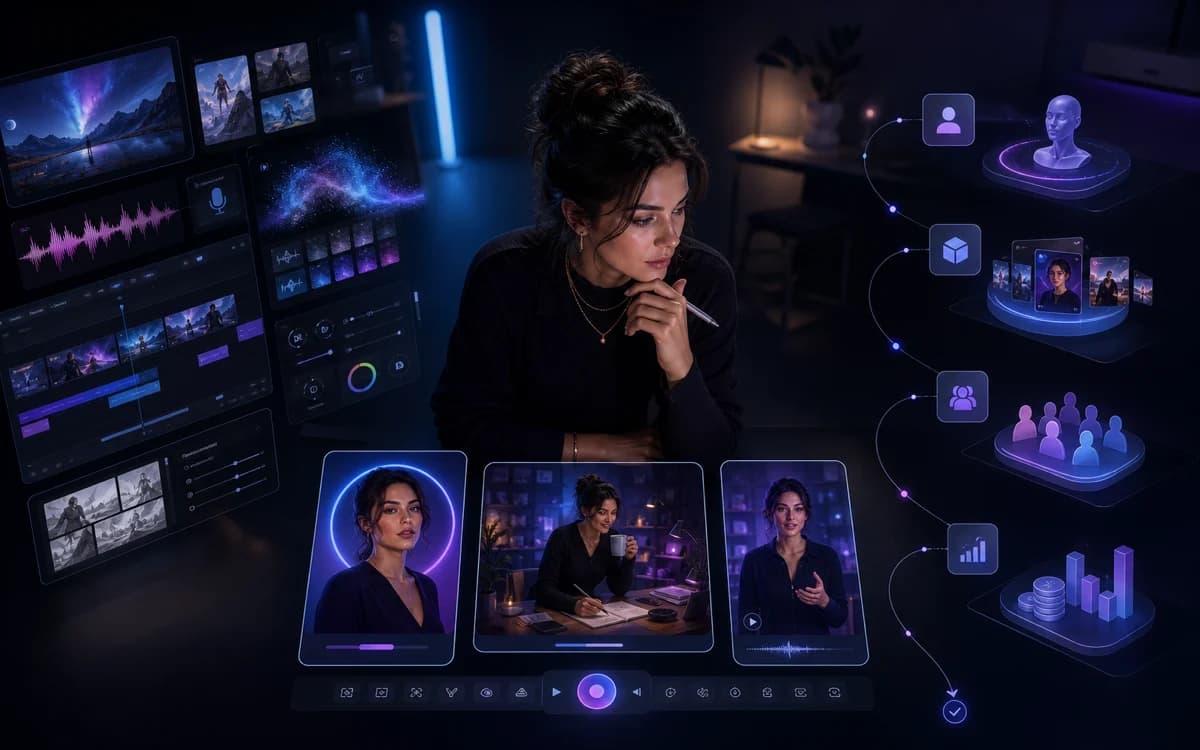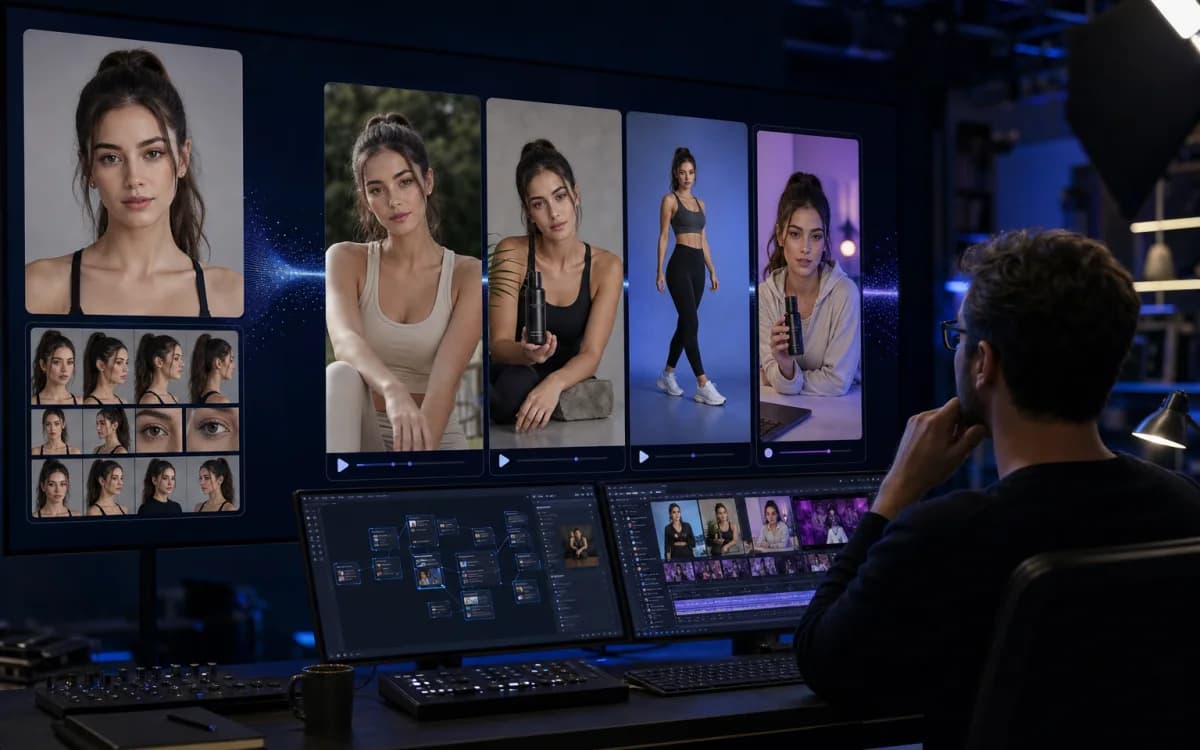
A useful Fizzly AI review has to answer two questions separately. First, can the platform train a reusable character that remains recognizable across images and video? Second, does its broad model catalog make production easier—or move more technical choices onto the creator?
Fizzly positions itself as a multi-model content platform with LoRA character training, image generation, video generation, face swap, editing, and upscaling. That can be a strong fit for experienced operators. It is not automatically the easiest route for someone who still needs to define the creator, audience, content system, and revenue plan.
What is Fizzly AI?
Fizzly AI is an image-and-video creation platform that lets users train a custom LoRA character, save that identity, and generate recurring creator content with several underlying models. Its public influencer page targets virtual influencers, AI models, Instagram personas, and brand content.
The official model directory lists multiple image and video engines rather than a single proprietary generator. Fizzly combines that model access with face swap, image-to-image editing, upscaling, skin enhancement on selected plans, character slots, workflow limits, and credit-backed video generation.
- Custom LoRA training for reusable characters
- Image generation across several current models
- Image-to-video and text-to-video model access
- Face swap for images and video
- Image editing, image-to-image, upscaling, and workflow tools
Fizzly AI review: where the platform is strongest
Fizzly's clearest advantage is technical breadth around a trained identity. A creator can establish one character, generate stills with different image models, and then test short clips with different video engines without rebuilding the entire toolchain elsewhere.
That is valuable when the operator understands what LoRA training changes and when a reference-image workflow is sufficient. The platform also displays the credit cost before generation under its current terms, which helps a disciplined user track production economics. Use the consistent character AI workflow to test the same identity rather than selecting only the best output.
| Fizzly strength | What to verify |
|---|---|
| Custom LoRA training | How much training data and cleanup your identity needs |
| Multi-model images | Which model produces the best usable rate for your niche |
| Multi-model video | Whether still-image identity survives motion and audio |
| Face swap and editing | Consent, identity stability, and repair time |
| Credit cost shown before generation | Total credits per approved weekly batch |
Where Fizzly may be a weaker fit
The same flexibility that attracts technical creators can create decision load for beginners. Character training, model choice, credit ranges, resolution, video duration, face swap, upscaling, and post-production all become part of the operator's job. More choices are useful only when the team can choose well.
Fizzly can produce assets, but the user still needs a differentiated niche, persona voice, content pillars, platform plan, disclosure approach, audience promise, offer, and monetization system. If those are the real gaps, another model does not solve them.
Read the AI influencer Instagram strategy and monetization guide before comparing production volume. A larger output count is not useful when the account lacks a reason to exist.
Fizzly AI pricing and credits
On July 17, 2026, Fizzly's official pricing page listed a free allowance of five monthly credits. It displayed annual-effective promotional rates of $15 for Creator with 300 monthly credits, $24 for Pro with 800, and $35 for Ultimate with 1,500, alongside higher crossed-out reference prices. Because the page described a limited-time sale and annual billing, verify both the live term and renewal amount before paying.
The same page said standard images can start at one credit, premium images can cost five to ten, typical five-second videos can range from five to sixteen, and training or editing actions have separate costs. One-time top-up packs were listed as non-expiring, while subscription economics still depend on the current account and terms.
- Confirm whether the displayed rate is monthly or annual-effective
- Separate subscription credits from one-time top-up credits
- Record model, duration, audio, resolution, and retry costs
- Count approved assets rather than total generations
- Test the free allowance before committing to a promotion
Fizzly ownership, privacy, and responsible use
Fizzly's current Terms of Service say users retain ownership of original content and own custom LoRA models they train, while generated output remains subject to the underlying model terms. The terms also make the user responsible for training rights and prohibit non-consensual intimate imagery, inappropriate depictions of minors, deceptive fraud, and infringement.
The Privacy Policy says Fizzly stores generated images, videos, prompts, generation parameters, and custom LoRA models to provide the service. It says users can request deletion or export, while some information can be retained for legal, dispute, or legitimate-business reasons. Do not upload a face, voice, or protected asset you are not authorized to process.
Fizzly AI vs Clout
Clout and Fizzly both support reusable creator identities and social content, but they begin at different layers. Fizzly is a flexible production stack: train a character, select models, generate, edit, and animate. Clout is a guided creator system: define the identity and niche, create a coherent batch, launch it, and connect the persona to monetization.
Choose Fizzly when model breadth, LoRA training, and hands-on production control are the main requirements. Choose Clout when the user needs fewer technical decisions and more creator-business direction. See the full Clout vs Fizzly AI comparison for the buyer-fit table.
| Your priority | Better starting point |
|---|---|
| Custom LoRA training and multi-model production | Fizzly |
| Hands-on image, video, face-swap, and editing control | Fizzly |
| Guided persona, niche, and content-system setup | Clout |
| Creator launch and monetization direction | Clout |
| Fewer technical choices for a first AI influencer | Clout |
How to evaluate Fizzly before paying
Use one original fictional adult character or a real adult likeness with explicit permission. Train or configure the identity once, then generate a neutral portrait, full-body scene, second outfit, indoor and outdoor scenes, product interaction, and short video. Keep the creative brief fixed.
Use the AI influencer video checklist to inspect every clip. Track face and body drift, hand and product errors, video continuity, model choice, credits, rejected generations, editing, upscaling, and review time.
- Confirm ownership and consent for every training image
- Compare at least two scenes that stress identity consistency
- Measure the full cost of one approved image-and-video batch
- Review underlying model terms for the outputs you use commercially
- List the strategy and publishing tools still required outside Fizzly
Fizzly AI review verdict
Fizzly is a credible shortlist option for technical creators who want LoRA character training and several image and video models in one credit system. Its broad production features can replace parts of a fragmented stack, and the free credits create a small initial test path.
It is not automatically the best workflow for a first-time AI influencer builder. Clout is the stronger alternative when the main need is guidance from creator definition through content, launch, and monetization. Fizzly is stronger when the strategy is already established and flexible production control is the bottleneck.
Score both workflows with the AI influencer generator checklist, then build your original AI influencer in Clout if the guided route fits better.