What a split diopter shot does
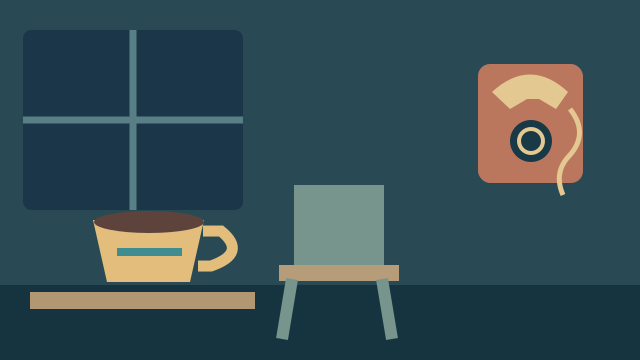
A split diopter shot gives a near detail and a distant detail simultaneous emphasis in different parts of one frame. Imagine a teacup close to the camera and a telephone on the far wall. Keeping both readable can let the viewer watch a small foreground action while waiting for something to happen behind it.
In the physical technique, part of the view passes through a close-up diopter while another part remains uncovered. Schneider-Kreuznach's split-diopter fact sheet describes those separate foreground and background paths. This creates two selected focus regions rather than making every distance equally sharp.
The Tiffen split-field description identifies semicircular glass mounted in a ring that can rotate in a matte box. The useful creative decision is which information belongs on either side. A memorable frame starts with that relationship, not with the accessory name alone.
Compare three compositions in the free lab
The composition lab above contains an original near cup, middle chair and distant phone. Select Near cup only to emphasize the foreground. Select Near cup and far phone to keep those two details readable while the chair softens. Select All three objects sharp to compare a broader distribution of detail.
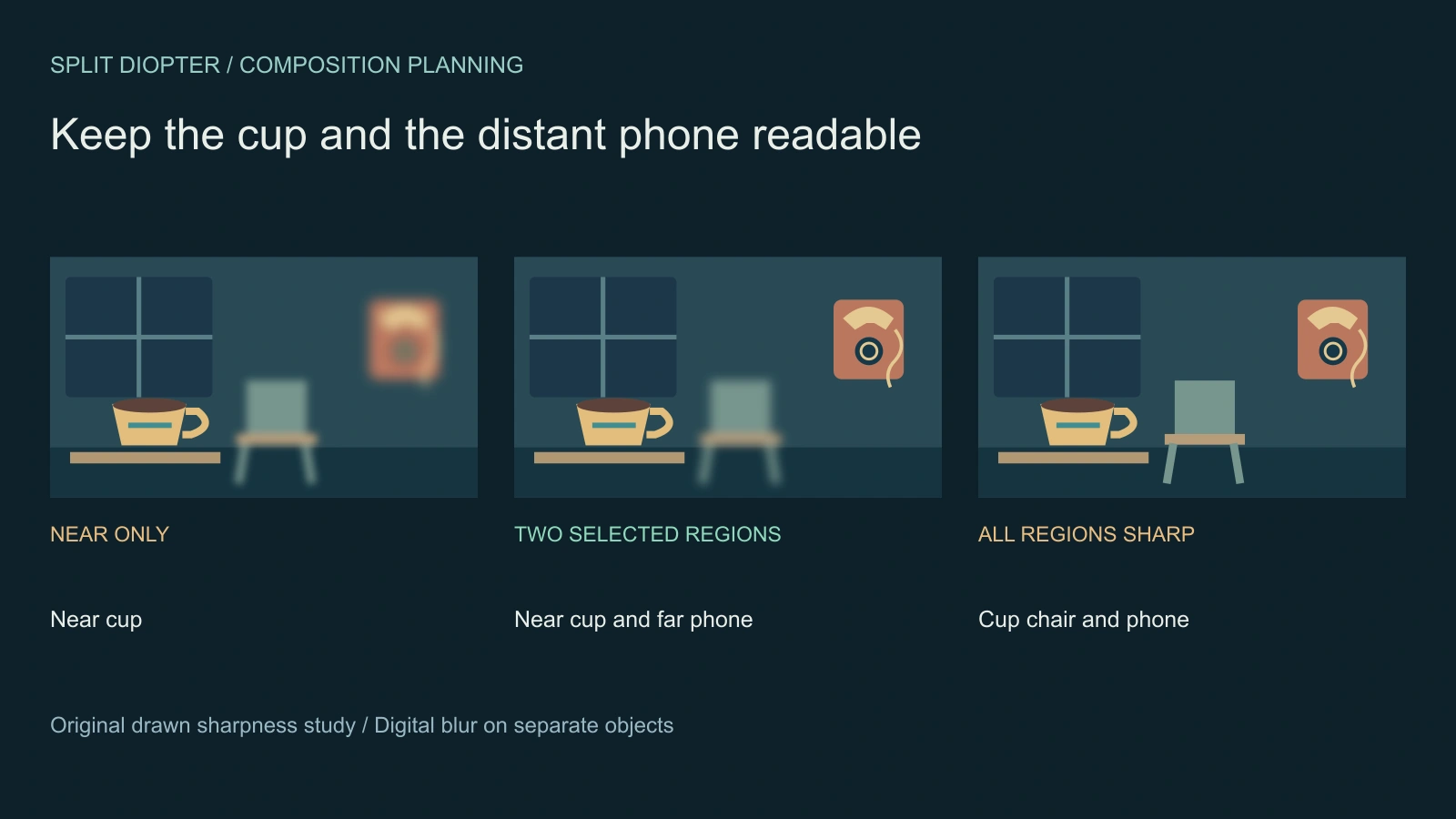
The objects remain at the same positions and sizes. The lab changes a blur filter on separate drawn layers. Its middle chair makes an important distinction visible: two chosen regions can be readable without every intervening object becoming equally clear. This is an authored illustration, not photographed diopter footage or a physically calculated depth-of-field result.
Split diopter versus deep focus and rack focus
| Choice | Attention pattern | Useful scene question |
|---|---|---|
| Split-focus composition | Near and far details readable together in selected regions | Should the audience monitor both at once |
| Deep-focus composition | A broad range of scene depth is readable | Does the whole spatial relationship matter |
| Rack focus | Sharpness transfers between subjects over time | Should the second detail become important later |
Use the rack-focus guide when you want a deliberate transfer of attention during the shot. The split-focus idea is useful when the tension comes from simultaneous information. A wide shot containing two objects is not sufficient by itself; the important details must actually be readable in the returned image.
Give the foreground and background different story jobs
Our original Night Window brief uses a near amber cup with a teal band and a distant coral wall phone. The cup marks the waiting character's immediate space. The phone carries the possibility of a reply. An empty chair between them helps establish depth without becoming a third competing clue.
For a short drama, replace those objects with details the scene genuinely needs: a hand holding a key while someone waits at a far doorway, a written reply beside a distant listener, or a product detail with a relevant action behind it. Describe the intended relationship before choosing the focus treatment. Two unrelated sharp objects add visual complexity without helping the story.
Keep the foreground subject large enough to read, and leave the distant subject a clear silhouette or recognizable detail. Check the intended mobile crop early. If the phone disappears outside a vertical crop, the shot loses the very information the composition was designed to preserve.
Place the transition where it can belong to the scene
A split-field setup can expose a transition between treated and untreated regions. Look for an architectural edge, darker separation or unobtrusive area that fits the blocking. Rehearse subject movement against that boundary instead of approving a still composition that immediately breaks when a person steps across it.
ARRI's diopter accessory guide documents different frames, stages and clearances. For a physical shoot, establish the exact filter, holder and lens arrangement with the current equipment documentation and a rehearsal. Our digital lab supplies no lens strength, measured distance or fitting recommendation.
Write an AI scene brief around stable objects
One locked-off composition in an original quiet room at night. A large amber teacup with one teal band sits near the camera on the left. A small coral wall phone remains clearly readable on the distant right wall. An empty middle chair is softer and less prominent. Keep the cup and phone readable together, preserve their shapes and positions, and avoid a focus pull, cut, zoom, new lettering or extra objects.
This is an untested creative brief. Use the selected operation's supported references and settings. If a generated image simply sharpens the whole room, or a video replaces the phone midway through, it has not preserved this plan. Keep an accepted reference image and inspect the actual take before requesting additional coverage.
Develop original source material in Clout AI Cinema or Image and Video. The studio's available operations determine what you can submit. This guide does not establish a physical diopter control or a post-capture refocusing feature in Clout.
Review the shot over its complete duration
Check the near subject, distant subject and intervening area separately, then watch the whole frame. Look for focus flicker, changing object identity, a drifting transition, an unexplained camera move and a final hold that ends too soon. A polished opening thumbnail does not show whether both details remain useful throughout the action.
Download the Night Window focus brief, blank focus review sheet and original drawn scene. For the adjoining sound relationship, use the sound-bridge guide and audible study. For the wider episode, connect the shot to the AI short-drama plan.