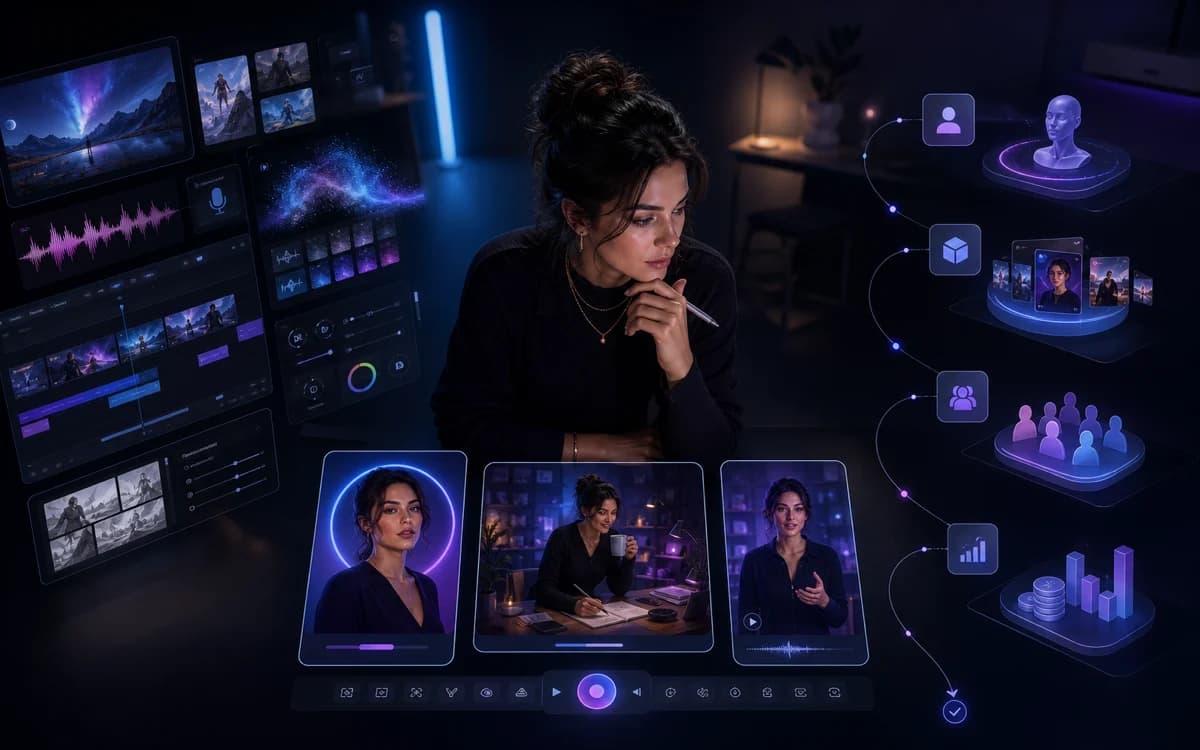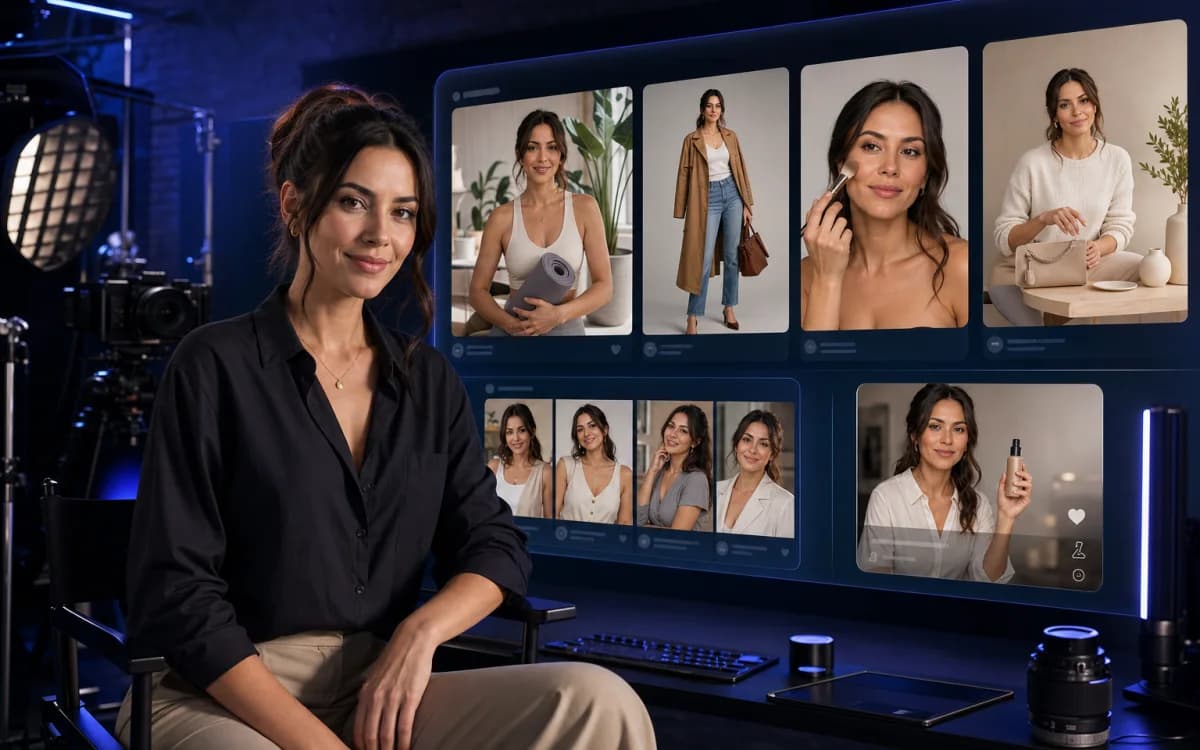
A useful Foxy AI review now needs to cover two products inside the same creator platform. Foxy's help center describes training a personalized AI model from photos of yourself, while its newer AI-influencer page and Shop describe exclusive pre-made virtual characters that can be purchased without uploading your own likeness.
Foxy can therefore fit an established real creator or someone who wants to acquire a ready-made fictional identity. Clout starts from a different job: guiding a user through shaping an original virtual influencer, producing consistent content, launching the creator, and building a monetization direction around it.
Foxy AI, FoxyAI, Foxy.ai, and Foxi AI explained
The searches Foxy AI, FoxyAI, Foxy.ai, and the common misspelling Foxi AI usually point to the creator platform at foxy.ai. This review covers that consumer image, video, digital-twin, and virtual-influencer product from Dreamworld Research.
Do not confuse it with FoxyAI at foxyai.com, a separate company whose public case studies focus on computer-vision products for real estate. When checking a login, plan, policy, or support article, confirm that the domain is foxy.ai or help.foxy.ai before entering account information.
What is Foxy AI?
Foxy AI is an image-and-video studio for creators and brands. Its public homepage highlights lifestyle, fashion, beauty, and ecommerce content, while the official What is Foxy guide describes a three-step workflow: upload three photos of yourself, train an AI character, then generate content from templates or custom prompts.
Foxy also has a separate AI Influencers page and an official Shop guide. The guide says a buyer can purchase an exclusive, pre-trained fictional character, keep it permanently, and generate private content with it. That expands Foxy beyond its original digital-twin positioning.
- AI character training from three photos of the creator
- Exclusive pre-made AI influencers sold through the Foxy Shop
- Photorealistic images across settings, outfits, and styles
- Short videos with generated audio
- Coordinated carousel content
- Templates and custom-prompt workflows for creators and brands
Foxy AI review: where the platform is strongest
Foxy has a clear audience: an established adult creator or brand spokesperson who wants more visual content without organizing a new photoshoot for every post. Training from three photos creates a low-friction starting point compared with a heavier dataset or technical LoRA workflow.
The product also connects common creator formats rather than stopping at a single portrait. Images, short video, and carousels cover several Instagram, TikTok, campaign, and personal-brand needs. Its plan table exposes estimated per-image and per-video costs, which makes the starting economics easier to model than a completely opaque credit system.
| Foxy strength | What to verify |
|---|---|
| Three-photo training | Whether the minimal set captures your likeness reliably |
| Images and carousels | Consistency across crops, outfits, scenes, and coordinated sets |
| Five- to fifteen-second video | Face, body, audio, and scene stability through motion |
| Creator-focused templates | Whether output fits your real niche and brand |
| Displayed unit estimates | Actual cost per approved image and clip after retries |
Where Foxy may be a weaker fit
Buying a prepared character removes model-training work, but it does not automatically create a differentiated creator brand. The project still needs a name, niche, personality, content pillars, story, audience promise, publishing cadence, disclosure approach, and revenue plan.
A three-photo setup is convenient, but a small input set also needs testing across difficult scenes. Full-body images, profile angles, unusual lighting, product interaction, new hair, different outfits, and motion can expose identity drift that is not visible in a close portrait.
Use the same-character AI image workflow and the AI influencer video checklist before assuming every format will remain stable.
Foxy AI pricing and credits
Foxy's public pricing needs careful verification. On August 28, 2026, the main product page displayed annual-effective prices of $6 per month for Starter with 80 credits, $26 for Creator with 350, and Pro from $53 with at least 750. The dedicated AI Influencers page displayed a different table: Starter at $29 per month with 100 credits and Creator at $99 with 1,000 credits, both labeled as including a virtual influencer.
Those surfaces may represent different billing selections or product bundles, but the public copy does not make the relationship fully clear. Open the exact product route you want, choose monthly or yearly, and verify the checkout total, included character, renewal price, and credit allowance before paying.
- Confirm whether you are buying the standard creator plan or a virtual-influencer bundle
- Confirm monthly versus annual billing and renewal price
- Check the current credit cost for your exact image or video mode
- Include failed generations and alternate scenes in the budget
- Measure coordinated carousels as sets, not unrelated images
- Choose the smallest plan that covers a measured weekly cadence
Commercial use, likeness consent, and disclosure
Foxy's official commercial-use help article says generated content can be used in advertising for a user's own business or AI character. Review the complete current terms, plan, and any product or music rights before a client campaign because a help-center answer is not a substitute for the contract that applies to the account.
Only train a likeness you own or have explicit, informed permission to use. A photo upload or character-training feature does not create consent. Foxy's privacy policy says uploaded images and data are collected to create personalized models and may be retained after account termination as described in that policy. Read the live retention and deletion terms before uploading personal images.
Store permission records, disclose synthetic media and paid promotions where required, and review every endorsement, testimonial, or real-world claim made by the AI version of the creator.
Foxy AI vs Clout
Clout and Foxy can both produce recurring creator content. Foxy offers a fast digital-twin path for a real creator and a Shop path for acquiring a prepared fictional character. Clout is designed to help shape an original virtual influencer and connect that identity to content, launch, and monetization.
Choose Foxy when a consenting real creator wants to scale an established appearance or when buying an exclusive pre-made character is preferable to designing one. Choose Clout when the creator should be built around your own niche, identity, and business direction from the beginning. Read the full Clout vs Foxy AI comparison before choosing.
| Your priority | Better starting point |
|---|---|
| Scale a consenting real creator's likeness | Foxy |
| Buy an exclusive pre-made AI influencer | Foxy |
| Fast three-photo setup for images, carousels, and video | Foxy |
| Invent an original fictional virtual influencer | Clout |
| Define persona, niche, launch, and monetization | Clout |
| Build a new creator brand rather than a digital twin | Clout |
How to evaluate Foxy before paying
Use three high-quality, permitted photos that represent the same adult clearly. Then create a neutral portrait, side angle, full-body image, indoor and outdoor scenes, second outfit, product interaction, three-image carousel, and short video. Keep the brief consistent so the test measures identity rather than prompt luck.
Compare the outputs with the AI influencer generator checklist. Track credits, retries, hands, face shape, hairline, body proportions, product geometry, audio, motion, and review time.
- Do not train anyone without explicit permission
- Stress-test more than close-up portrait angles
- Review every carousel as one coherent set
- Inspect every video frame and generated audio before publishing
- Verify the live commercial terms and platform disclosure requirements
Foxy AI review verdict
Foxy is a credible shortlist candidate for real creators who want to scale their own permitted likeness and for buyers who prefer an exclusive pre-made character. Its three-photo training, Shop, images, coordinated carousels, and short videos cover more of the AI creator workflow than the older digital-twin-only positioning suggested.
Clout remains the stronger alternative when the character should be designed around an original niche and developed into a creator business through one guided workflow. The right choice depends on whether you are scaling a real person, buying a prepared identity, or building your own new creator brand.
Read the avatar vs AI influencer guide, then create an original virtual influencer in Clout if a new persona—not a digital twin—is the goal.