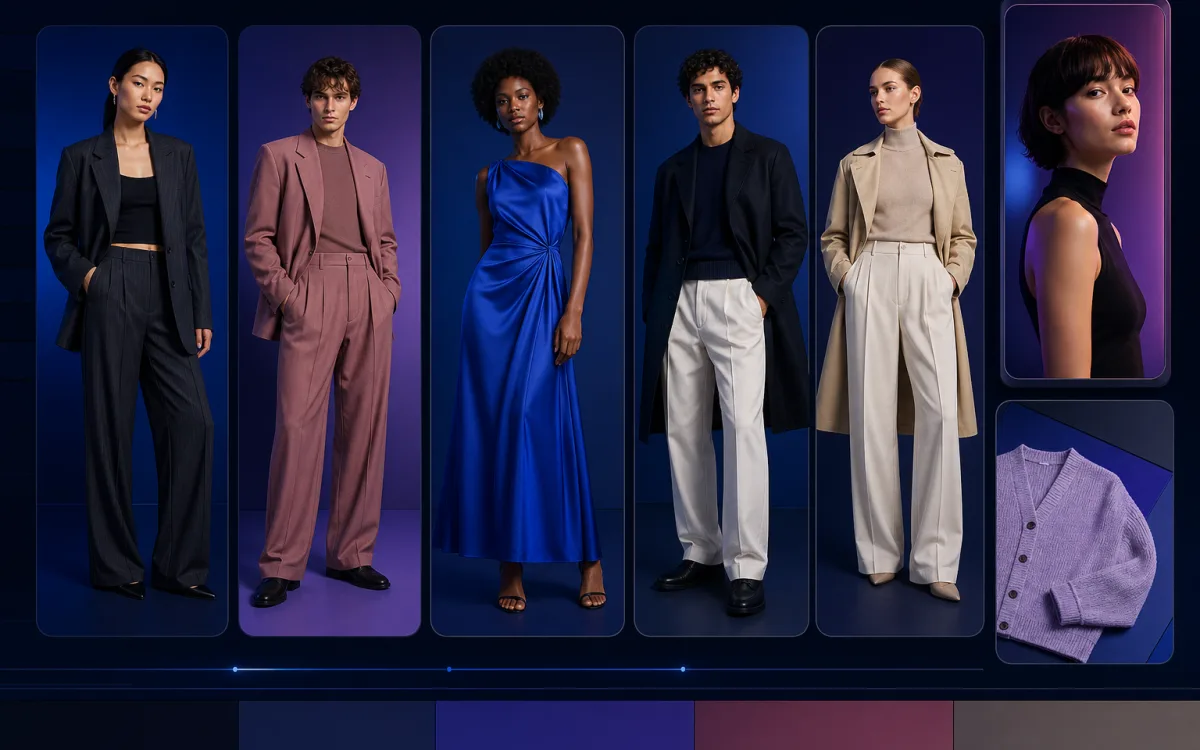
The best AI fashion model generators do not all solve the same problem. Some turn a flat-lay garment into an ecommerce model photo. Others replace the person in an existing product image, create campaign variations, expose fashion workflows through an API, or build a fictional fashion creator who can publish repeatedly on social media.
That distinction is more important than a generic ranking. This guide compares six relevant starting points by buyer job, input, output, consistency, pricing model, and operational fit. It also gives you a controlled test for choosing a platform without relying on curated homepage examples.
Best AI fashion model generators at a glance
Start with the final asset. A product-detail page needs accurate clothing, predictable angles, and efficient SKU processing. A campaign needs art direction and variation. A social creator needs one recognizable identity across weeks of outfits, locations, captions, first frames, and video concepts.
| Best starting point | Primary buyer job |
|---|---|
| Botika | Turn owned clothing photos into on-model catalog images and short fashion video |
| Modelia | Use a broad self-serve fashion studio, consistent characters, accessories, video, or API |
| WeShop AI | Combine fashion models with product, editing, virtual try-on, and video agents |
| OnModel | Create or alter on-model product photography, including Shopify-oriented workflows |
| VModel | Access pay-as-you-go image, video, editing, and model APIs |
| Clout | Build one recurring AI fashion influencer and a social-content or monetization system |
1. Botika: best for clothing catalog production
Botika is the clearest specialist in this group. Its official product page focuses on upgrading clothing photos into on-model imagery and video for ecommerce, editorial, and social use. The public workflow accepts on-model, flat-lay, or mannequin inputs, then lets the user choose from a curated model and background library.
This constraint is part of the value proposition: Botika does not position its self-serve product as an open-ended text-to-image studio. Its FAQ says users cannot freely prompt new clothing or customize self-serve models and backgrounds. That can reduce creative range, but it may improve predictability for teams whose source of truth is an actual garment photo.
Read the full Botika review and Clout vs Botika comparison if you are deciding between catalog photos and a recurring creator brand.
- Strong fit: apparel brands, retailers, catalog refreshes, Shopify imagery, and garment-led campaigns
- Input: owned clothing photos rather than an unrestricted blank prompt
- Public credit model: one credit per photo and five per video as of the research date
- Watch: supported product categories, self-serve customization limits, turnaround, and correction policy
2. Modelia: best broad fashion creative studio
Modelia offers a wider fashion-specific toolkit. Its official site lists flat-lay-to-model, mannequin-to-model, model-to-model, virtual try-on, repose, outfit creation, background changes, accessories, upscaling, consistent characters, and video. The Modelia API also targets teams automating on-model product visuals and adjacent editing workflows.
The breadth makes Modelia a useful shortlist option for creative teams that need both ecommerce and campaign production. It also creates more work during evaluation: test each feature you actually need and calculate the combined credits, because a large tool menu does not guarantee equal garment fidelity or consistency across every workflow.
On July 17, 2026, the official pricing page listed a free watermarked plan, a one-time project pack, and monthly Basic, Pro, and Business tiers. Commercial rights, export resolution, consistent-character allowances, batch generation, and API access varied by tier. Verify the current page before buying.
3. WeShop AI: best for multi-agent ecommerce creation
WeShop AI organizes ecommerce production into specialized agents. Its AI Fashion Model page covers flat lays, product photos, poses, body and style variation, backgrounds, campaign visuals, and lookbooks. Official API documentation also exposes both platform-provided fashion models and user-created models.
This is relevant when fashion photography is only one part of the content pipeline. WeShop also publishes product, editing, virtual try-on, pose, face, image-generation, and video options. The tradeoff is a more complex points economy: different agents and underlying models can consume very different amounts, so forecast a real batch instead of comparing only the first generation.
4. OnModel: best for focused on-model ecommerce photos
OnModel describes a direct workflow for turning flat-lay, ghost-mannequin, hanger, mannequin, or existing model images into on-model photography. Its official fashion photoshoot page emphasizes bulk processing, model selection, body and appearance variation, and assets for product pages, social accounts, and ads.
The product is especially relevant to merchants already working from ecommerce photography or Shopify. Its FAQ says customers own the generated assets for commercial use, but every buyer should still review the current terms, confirm rights to the source garment and photography, and inspect outputs for changed logos, seams, fit, or product details.
5. VModel: best for pay-as-you-go AI APIs
The VModel name has legacy relevance in AI fashion-model search, but the current official product presents a broad deployment and API platform rather than only a fashion storefront. It offers image, video, text, editing, and other models through a shared API and web interface.
Current public pricing is pay-as-you-go. VModel says new users receive $10 in free credit, purchased credits do not expire, and each model has its own pricing. This can fit developers or variable workloads, but the buyer should confirm that the exact fashion or virtual-try-on model needed is currently available and evaluate output rights at the model level.
6. Clout: best for a recurring AI fashion influencer
Clout solves a different job from catalog-first tools. It starts with one original adult creator persona, helps stabilize the identity, then turns that character into social photos, first frames, video concepts, content pillars, launch assets, and monetization direction. The existing AI fashion model generator workflow explains how to control identity, wardrobe, camera language, and fabric review.
Choose Clout when the model is meant to become a recognizable account—not merely a person wearing one SKU on a product page. The workflow is designed around continuity across posts and campaigns. For product-critical ecommerce photography, a specialized garment-preservation platform may be the better production layer, and the two categories can complement each other.
Use the consistent-character workflow and AI influencer content calendar to plan the complete weekly system before evaluating tools.
How to choose an AI fashion model generator
Run the same difficult but representative brief through every shortlisted tool. For an apparel catalog, include a solid garment, a busy print, fine knitwear, a visible logo, front and back views, and one item with tricky sleeves or straps. For a creator account, include a portrait, full-body look, indoor and outdoor scenes, another outfit, product interaction, and a vertical first frame.
Judge the set against the actual publishing standard. A visually attractive image can still fail if the garment changed, the creator drifted, a hand is malformed, the logo is wrong, or the cleanup time removes the promised efficiency.
- Garment fidelity: print, logo, seams, neckline, sleeve length, hem, texture, fit, and color
- Identity fidelity: face structure, apparent age, hairline, proportions, and styling logic
- Operational cost: approved outputs, retries, credits, turnaround, retouching, and review time
- Workflow fit: batch tools, API, Shopify, export resolution, team access, and video
- Rights and trust: source-photo rights, likeness consent, commercial use, privacy, retention, and disclosure
Best AI fashion model generator verdict
Botika is the most focused starting point for clothing catalog photography. Modelia offers the broadest fashion-specific creative suite in this shortlist. WeShop suits teams combining many ecommerce agents. OnModel provides a focused on-model workflow. VModel is relevant to developers who want a pay-as-you-go API catalog. Clout is the strongest fit when the output must become a recurring AI fashion influencer with a coherent social and business system.
There is no honest universal winner because catalog accuracy and creator continuity are different optimization targets. Choose by the recurring asset that creates revenue, then test the complete batch and calculate cost per approved output.
If your target is a recognizable virtual fashion creator rather than a product-catalog replacement, build your original AI influencer in Clout and test the persona across a complete social-content batch.


